Formula 1Competition·Formula 1 officials have conceded that a mistake in pit-lane speed measurement affected last weekend’s Monaco Grand PrixCompetition·Monaco Grand Prix, intensifying scrutiny of how technology and regulations shape outcomes at the sport’s most prestigious street race.
Five drivers — Lewis HamiltonPlayer·Lewis Hamilton, George RussellPlayer·George Russell, Pierre GaslyPlayer·Pierre Gasly, Franco ColapintoPlayer·Franco Colapinto and Oscar PiastriPlayer·Oscar Piastri — received penalties for exceeding the 60 km/h pit-lane limit in Monte Carlo. Gasly was handed two separate five‑second penalties, while Colapinto served his sanction after the chequered flag. The remaining drivers either took, or attempted to take, their penalties during the race itself.
The situation escalates when AlpineTeam·Alpine, which fields Gasly and Colapinto, lodges a formal request for a review of the sanctions immediately after the race. During a hearing held the following day, Formula 1Competition·Formula 1 representatives acknowledge that there has been an error in how pit-lane speed is measured in Monaco.

Unlike conventional road enforcement, Formula 1Competition·Formula 1 does not use radar guns in the pit lane. Instead, timing loops embedded in the asphalt and transponders on the cars are used to calculate average speed over defined pit-lane sectors. For 2026, the pit-lane layout in Monaco was slightly modified to accommodate the arrival of CadillacTeam·Cadillac in Formula 1Competition·Formula 1, leading to a reconfiguration of these sectors.
It is that modification which proves decisive. The measurement sectors are updated to reflect the marginally extended pit lane, but several drivers take a subtly shorter path by cutting the pit-lane line near the new CadillacTeam·Cadillac garages. By reducing the actual distance covered between timing loops, they inadvertently increase their calculated average speed in that sector — triggering automatic penalties — even though, according to the information presented at the hearing, their real speed never exceeds the 60 km/h limit at any moment.
The discrepancy exposes a critical vulnerability in a system that assumes cars follow a reference line exactly. In Monaco’s tight, low‑grip pit lane, where every centimetre matters in search of track position, teams and drivers naturally hug the shortest legal route. In this case, that search for efficiency collides with the geometry baked into the timing configuration.
For Gasly, the consequences are sporting as well as technical. The French driver’s twin time penalties strip him of a podium finish for AlpineTeam·Alpine, reshaping the final classification of a race already marked by late drama. Russell’s situation is also complex: one of his penalties is not fully served during a pit stop and is later converted into a drive‑through‑equivalent sanction after a red‑flag restart, dropping him out of the points.

The controversy lands in the same weekend that officials face criticism over track conditions. Late in the race the surface near the end of the lap begins to break up, contributing to incidents and forcing race control to deploy a red flag while the asphalt is inspected and secured. For a venue that trades on perfection and glamour, a damaged racing surface and disputed timing data combine into an uncomfortable narrative.
What happens next now becomes as important as what happened in Monaco. The admission of error on pit‑lane measurement places pressure on Formula 1Competition·Formula 1 and the FIA to refine how timing sectors are defined, particularly on street circuits where painted lines, new garages and temporary structures can subtly alter the racing line and effective distance.
Any revision will have to balance safety, fairness and clarity. Strict pit‑lane limits exist to protect mechanics, officials and media working in close proximity to cars that still accelerate faster than most road vehicles. At the same time, penalties derived from microscopic deviations — exacerbated by an unaccounted‑for shortening of the distance between loops — risk undermining confidence in officiating and creating the perception that results hinge on technicalities rather than performance.
Teams are expected to push for clearer guidance on how pit‑lane lines are drawn and enforced, and for robust validation that timing configurations match the actual racing surface once all infrastructure is in place. The Monaco case is likely to be cited in future discussions about how new entrants such as CadillacTeam·Cadillac are integrated into existing circuits without unintended consequences.
For the drivers involved, the sanctions stand for now, but the broader debate has moved on from individual errors to systemic reliability. In an era when thousandths of a second and tenths of a kilometre per hour can decide podiums, Monaco 2026 becomes a reference point for how finely calibrated — and how transparent — Formula 1Competition·Formula 1’s technology and governance must be.
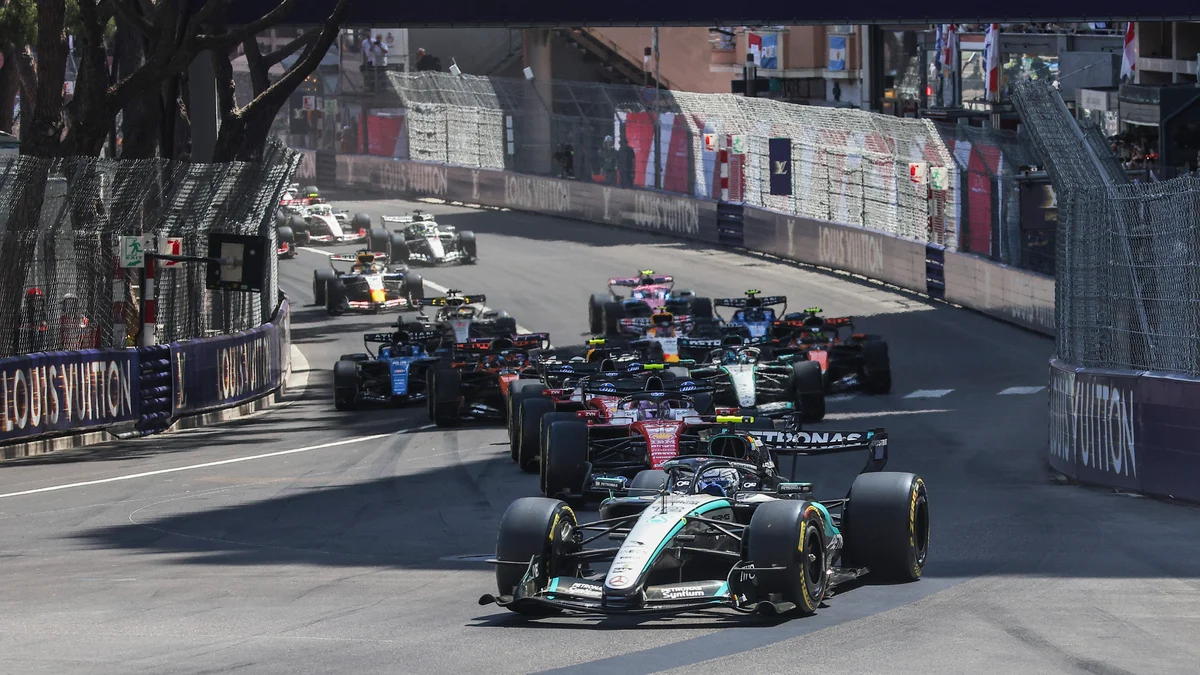
F1 cars with drivers Antonelli, Hamilton, Leclerc, and Russell at the start of the Monaco Grand Prix. NurPhoto/IMAGO
NurPhoto/IMAGOThis article was generated by AI (sonar-pro). Learn more.