Ferrari is accelerating its power unit programme with an aggressive two-step development plan that aims to close the performance gap to Red Bull under Formula 1’s ADUO compensation framework.
Introduced at the start of the season alongside new technical regulations, the ADUO system is designed to help manufacturers with weaker power units reduce the performance deficit to their rivals. The data that underpins ADUO remains confidential, but information emerging over the Monaco Grand Prix weekend indicated that Red Bull currently leads the field on engine performance, ahead of Mercedes and Ferrari.
According to figures cited in FIA documentation, the Mercedes power unit is assessed to be approximately 2–4% down on Red Bull’s benchmark, while Ferrari’s unit is believed to be around 4–6% weaker. That spread defines how much additional development each manufacturer is permitted: Mercedes is allocated one extra performance upgrade across this season and next, while Ferrari is authorised to deliver two.

In Maranello, that regulatory headroom is already being translated into a concrete timeline. Ferrari is working at full speed to introduce its first evolution of the power unit for the Austrian Grand PrixVenue·Austrian Grand Prix next week. A second upgrade is then targeted for the team’s home race at Monza in early September. Internal projections suggest the combined effect of these changes could lift Ferrari’s power unit output by around 30 horsepower, a significant gain in the tightly controlled hybrid era.
The strategic logic is clear. With Red Bull setting the standard on outright power and Mercedes granted a narrower upgrade window, Ferrari is choosing to front-load its authorised development in search of a competitive edge on circuits where engine performance is decisive. By splitting its upgrades across Austria and Monza, the team aims to validate the first step in race conditions before committing to a second, more ambitious evolution later in the European season.
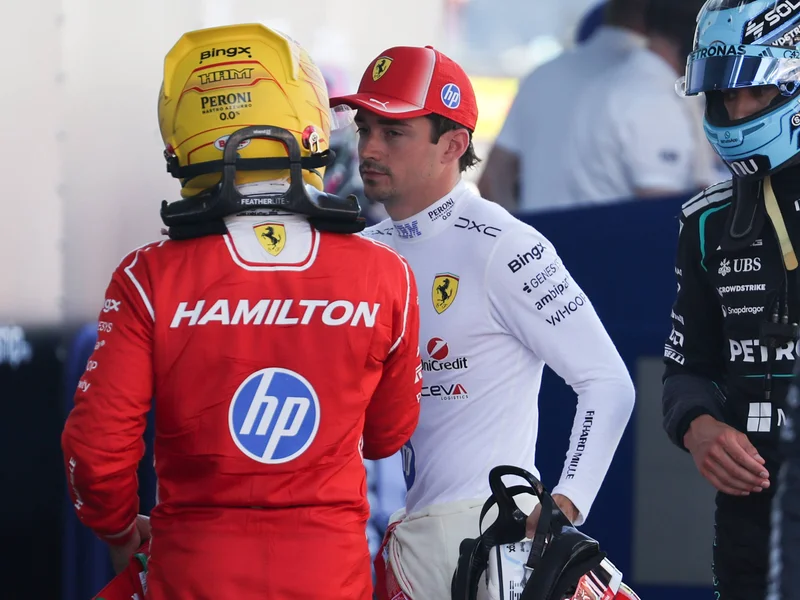
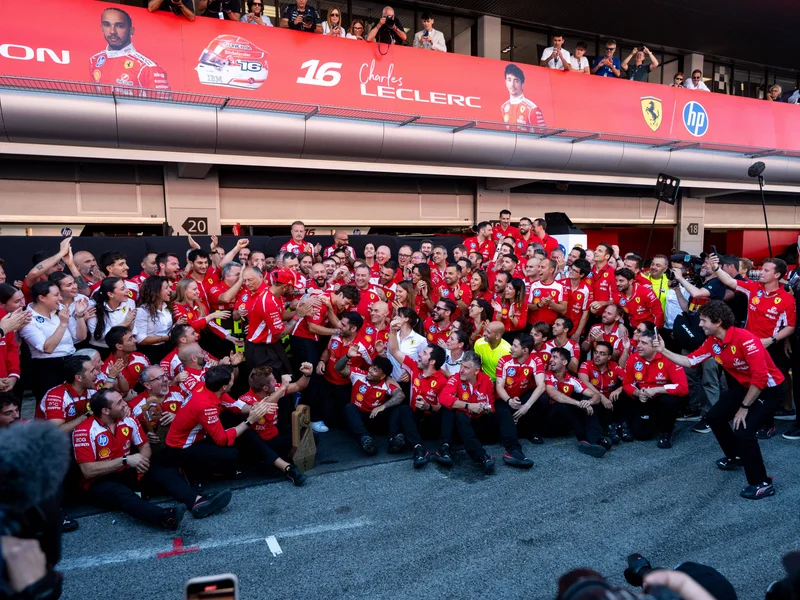
The timing also reflects the current profile of Ferrari’s car. In Barcelona last week, the team demonstrated that it already has a strong chassis, a platform that allowed Lewis HamiltonPlayer·Lewis Hamilton to fight through for his first victory with Ferrari. That result underlined the car’s efficiency and balance in medium- and high-speed corners, but also highlighted that there is still lap time to be found on long straights where power remains the dominant factor.
The planned power unit gains are therefore geared towards tracks where maximum speed is critical. Circuits such as the Red Bull Ring and Monza place a premium on acceleration out of slow corners and sustained full-throttle running, exposing any deficit in deployment efficiency or peak output. If Ferrari’s projections prove accurate, the additional 30 horsepower could materially improve qualifying performance, overtaking potential and defensive capability on those layouts.

There are broader competitive implications as well. Under the ADUO mechanism, any performance step Ferrari achieves will be closely watched by rivals and regulators alike, not only for its impact on race results but also for how effectively the system delivers on its aim of convergence. A successful implementation would show that lower-ranked power units can use targeted, regulated development to challenge the current benchmark, rather than relying solely on chassis gains or strategic ingenuity.
For the drivers, the benefits are straightforward. Lewis HamiltonPlayer·Lewis Hamilton and Charles LeclercPlayer·Charles Leclerc stand to gain a more complete package: a car that already behaves well in corners, allied to a power unit better suited to defending and attacking on straights. That combination could alter race dynamics at venues where Ferrari has recently had to compromise on setup or strategy to compensate for a shortfall in engine performance.
The next phase will unfold quickly. Austria offers an immediate test of the first evolution in a compressed race weekend, with its short lap punishing any weakness in traction or straight-line speed. Monza, if the second step arrives as planned, will then serve as the definitive benchmark for Ferrari’s 2026 power unit project — a high-speed referendum on whether this aggressive ADUO strategy can genuinely recalibrate the pecking order in the engine stakes.
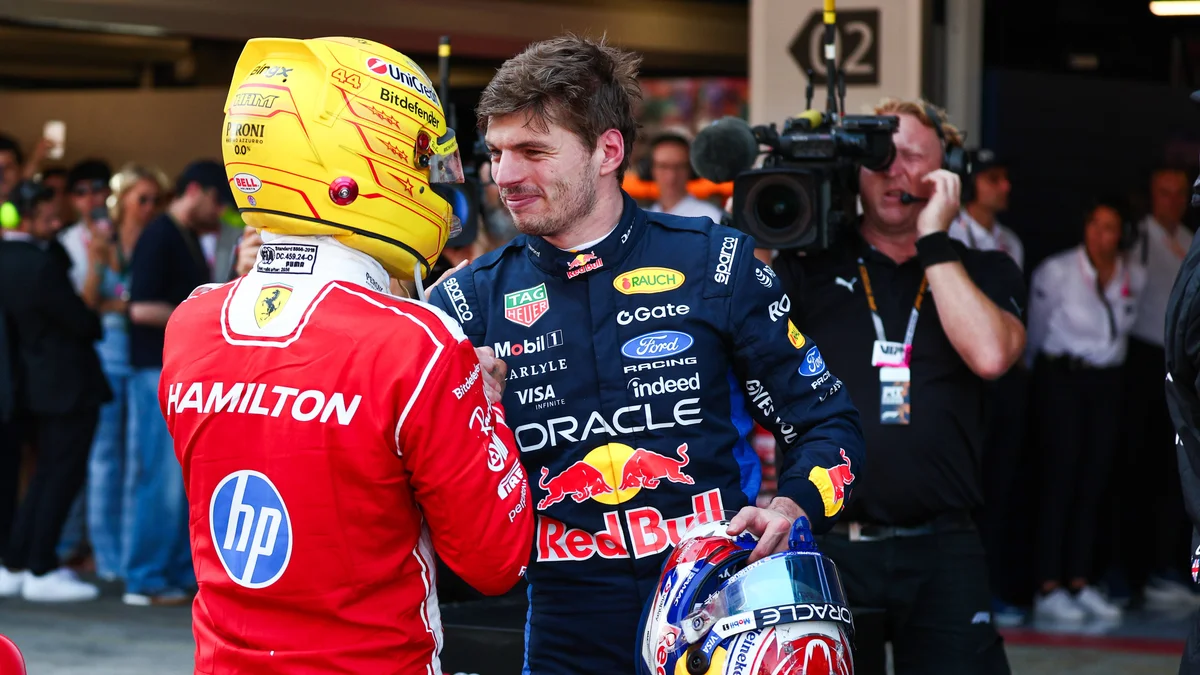
Lewis Hamilton (Ferrari) and Max Verstappen (Red Bull) at the F1 Grand Prix. DeFodi Images/IMAGO
DeFodi Images/IMAGOThis article was generated by AI (sonar-pro). Learn more.