Lando NorrisPlayer·Lando Norris lays down an early marker in Barcelona, ending Friday’s second free practice fastest for McLarenTeam·McLaren as the focus quickly shifts from outright speed to tyre survival and strategy.
Drivers run all three PirelliTeam·Pirelli slick compounds during the opening day at the Circuit de Barcelona-CatalunyaVenue·Circuit de Barcelona-Catalunya, completing representative long runs on the C2, C3 and C4 tyres. According to the latest guidance from PirelliTeam·Pirelli and international reports, this softer range is one step more aggressive than the supplier’s traditional selection for this track, a deliberate move to encourage increased pit stop activity and a wider spread of strategies on Sunday.
The immediate consequence is clear: tyre management, not just raw pace, is likely to define the Spanish Grand PrixCompetition·Spanish Grand Prix. Barcelona remains one of the most demanding circuits on the calendar for rubber, with a sequence of long, loaded right-handers exposing the front-left tyre in particular to sustained lateral forces. The abrasive, ageing asphalt amplifies this load, and with the race taking place deeper into the European summer, higher track temperatures add an extra layer of thermal stress.

PirelliTeam·Pirelli’s technical team notes that many outfits largely avoid the hard compound during Friday running, an early signal that they are preserving both race-allocated sets for Sunday. Those who do venture onto the hardest tyre report limited grip, with the rubber sliding more than the softer options and overheating quickly. Crucially, the degradation rate on the hard appears closer than usual to that of the medium and soft compounds, eroding the traditional advantage of the most durable tyre.
That behaviour reshapes the strategic picture. With the C4 soft providing the best peak grip and the C3 medium delivering more consistent performance over a stint, teams face a narrow but crucial trade-off. PirelliTeam·Pirelli’s analysis indicates a performance gap in the region of 0.5–0.6 seconds per lap in favour of the soft over the medium, a sizeable difference in qualifying trim that could still prove attractive for key phases of the race if degradation can be controlled.
Thermal degradation, rather than simple wear, emerges as the primary concern. As the surface temperature climbs, the tread overheats, leading to loss of grip and forcing drivers to back off to cool the tyres. During Friday’s qualifying simulations, many need as many as two slow laps between push attempts to bring temperatures back into the working window. That pattern underlines how narrow the operating margin may be over a full Grand Prix distance.
All of this feeds into a clear forecast from PirelliTeam·Pirelli: teams should prepare for at least two pit stops in race trim, with a strong possibility that a single-stop strategy will be uncompetitive over 66 laps. The combination of softer compounds, abrasive asphalt and sustained corner loads makes it unlikely that any driver can maintain a viable pace while stretching one set of tyres to the traditional one-stop thresholds.

For McLarenTeam·McLaren and Norris, Friday’s pace offers more than a psychological boost. A car that can extract lap time from the softer compounds without over-stressing them on long runs will hold a genuine strategic edge, particularly if it allows flexibility between starting on softs or mediums and switching between aggressive undercut attempts and longer second stints. The early data suggests McLarenTeam·McLaren has a competitive baseline on both low-fuel and race simulations, putting the team in a strong position as the weekend develops.
Rivals, including Mercedes, Ferrari and Red Bull, will drill into their long-run traces overnight, looking for ways to manage front-left temperatures and minimise sliding through Turn 3 and the final sector. Small adjustments to downforce levels, mechanical balance and energy deployment could be decisive in keeping tyre temperatures within range and unlocking a second push phase on each stint.
What comes next is a qualifying hour where track position remains vital but can no longer be the only focus. With PirelliTeam·Pirelli’s tyre choice pushing the field towards more stops and more variation, Sunday’s Spanish Grand PrixCompetition·Spanish Grand Prix is shaping into a race where the fastest package over a single lap may not automatically translate into the strongest hand over a full strategic battle. For now, Norris and McLarenTeam·McLaren hold the early advantage, but the real contest begins once the lights go out and tyre plans move from simulation to reality.

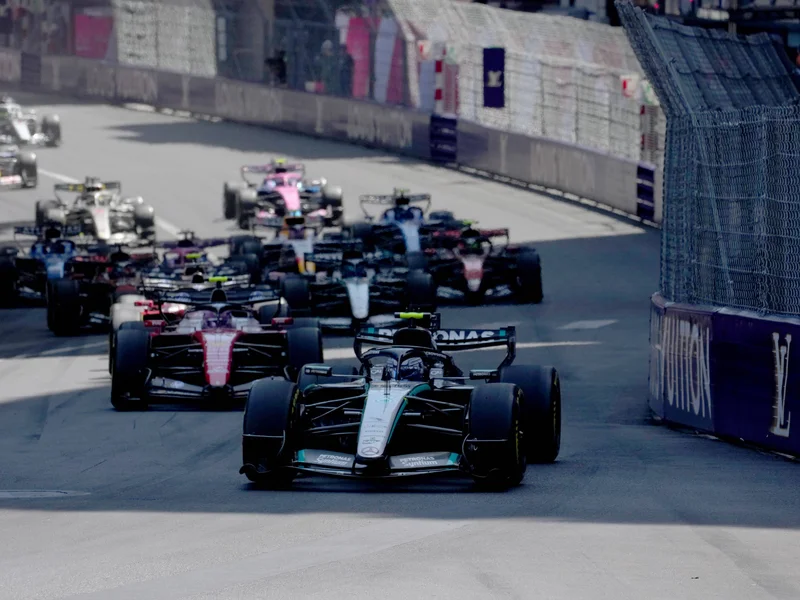
Lando Norris in his McLaren MCL40 during practice at the Barcelona-Catalunya Grand Prix. IPA Sport/IMAGO
IPA Sport/IMAGOThis article was generated by AI (sonar-pro). Learn more.