The conclusion of a Formula 1Competition·Formula 1 Grand PrixCompetition·Grand Prix often brings with it a period of uncertainty, as stewards deliberate on incidents that can significantly alter the final race classification or the grid for subsequent events. This delay in decision-making has become a recurring point of contention within the sport, prompting calls for a more streamlined process.
Under the current regulations set by the FIACompetition·FIA, teams are bound by specific deadlines to lodge protests against steward or race director decisions, or to submit appeals. However, the same temporal constraints do not apply to the stewards themselves, or the sporting commissioners, when they are tasked with rendering their verdicts. This asymmetry in the regulatory framework allows for situations where the definitive outcome of a race can remain in limbo for several hours after the chequered flag has fallen.
Guenther SteinerCoach·Guenther Steiner, the former team principal for HaasTeam·Haas in Formula 1Competition·Formula 1, has emerged as a prominent voice advocating for a fundamental change to this system. Steiner has publicly urged for the implementation of a defined timeframe within which these crucial decisions must be announced, thereby preventing prolonged waits for official results.

"According to me, if a decision has to be made after the finish, it must be a time limit, and if the stewards don't know how to proceed, then they simply shouldn't give penalties"— Guenther Steiner.
Steiner further questioned the rationale behind deferring judgments, particularly for straightforward infractions. "Why should one decision or another be postponed? What are the stewards doing during the race? They don't have to watch the race."
He articulated his view on the core responsibilities of the officiating body during a race weekend. "They have to analyze the incidents, evaluate the situation, clarify what happened, and make a decision."
Steiner highlighted the perceived simplicity of certain infringements, suggesting that extensive deliberation is often unwarranted. "What is there so much to discuss from a legal point of view when a driver crosses the white line? He either crosses it or he doesn't. That doesn't change with time."

The debate surrounding the timeliness of steward decisions underscores a broader discussion about the consistency and transparency of officiating in top-tier motorsport. While the complexity of certain racing incidents necessitates thorough review, the prolonged delays can detract from the immediate excitement and clarity of the sport for both competitors and fans. Introducing a time limit, as proposed by Steiner, could compel a more focused and efficient review process, ensuring that the sporting narrative is concluded promptly and decisively. The current season has already seen its share of unexpected outcomes, with a notable statistic from Formula 1Competition·Formula 1 revealing that none of the drivers who have led the opening lap of a Grand PrixCompetition·Grand Prix this season has gone on to win the race. This adds another layer of unpredictability to a sport already rich with drama, making timely and clear officiating even more critical.
The FIACompetition·FIA will undoubtedly continue to evaluate its procedural guidelines, balancing the need for meticulous judgment with the desire for immediate resolution. The call from figures like Steiner reflects a growing sentiment within the paddock for reforms that enhance the sporting spectacle without compromising fairness.
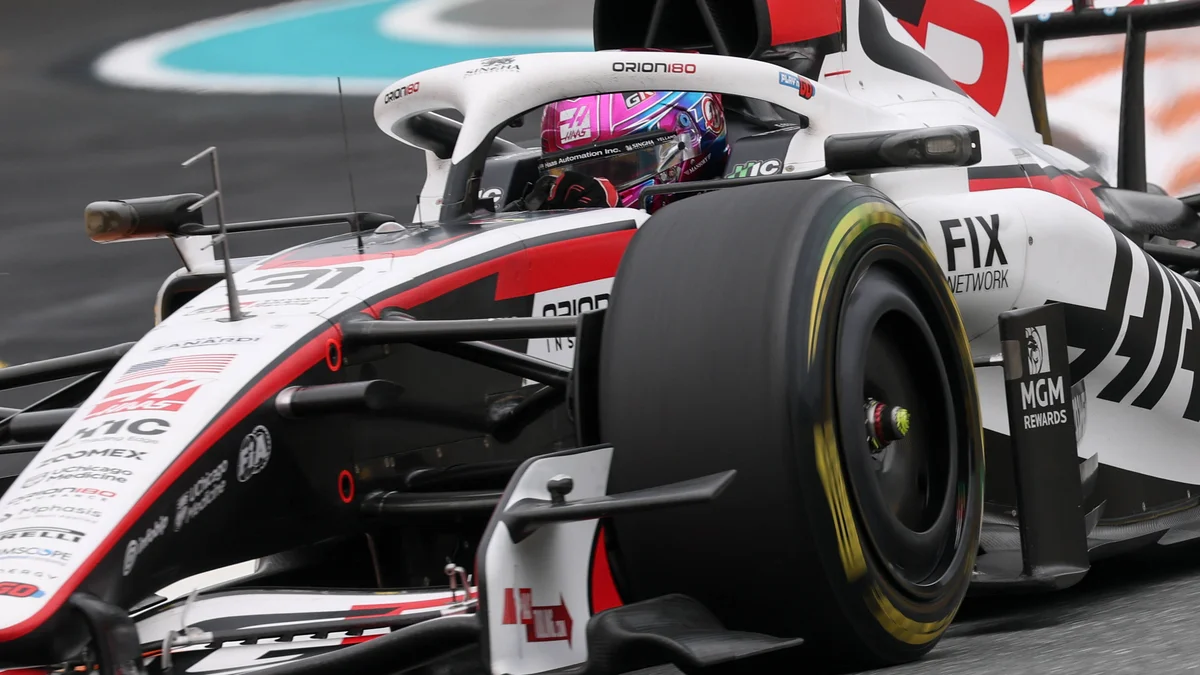
Esteban Ocon (31) of TGR Haas F1 Team speeds through turn three at the Miami Grand Prix. Icon Sportswire/IMAGO
Icon Sportswire/IMAGOThis article was generated by AI (gemini-2.5-flash). Learn more.