HondaTeam·Honda has officially joined MercedesTeam·Mercedes and Red Bull in advocating for significant changes to Formula 1Competition·Formula 1's power unit regulations, specifically targeting the 2027 season. The proposed revisions would see a shift in the hybrid system's power distribution, with 60% of the output derived from the internal combustion engine (ICE) and the remaining 40% from the electrical components.
This alignment marks a notable development in the ongoing discussions surrounding the sport's future technical direction. The former world champion, Max VerstappenPlayer·Max Verstappen, has been a vocal proponent of these changes, emphasizing that they would allow drivers to manage throttle input more freely and reduce the necessity of lifting off the accelerator solely to recharge batteries.
Despite HondaTeam·Honda's clear stance, a unanimous agreement among all Formula 1Competition·Formula 1 power unit manufacturers has yet to materialize. FerrariTeam·Ferrari and AudiTeam·Audi, two other key players, have expressed a desire to postpone these specific rule adjustments until the 2028 season. The discussions are complex, requiring a supermajority among manufacturers for the proposed 2027 implementation to proceed.

Currently, the manufacturer group comprises six entities, including CadillacTeam·Cadillac, alongside the governing bodies, the FIACompetition·FIA and FOMCompetition·FOM. To enact the changes for 2027, five of the six manufacturers must vote in favor. As it stands, the proposed rules require the support of two additional manufacturers to reach the necessary threshold.
HondaTeam·Honda's position comes as the manufacturer prepares for a new chapter in Formula 1Competition·Formula 1, partnering with Aston MartinTeam·Aston Martin as a power unit supplier from the 2026 season. This upcoming collaboration follows the conclusion of their previous partnership with Red Bull RacingTeam·Red Bull Racing, which will develop its own power units with FordTeam·Ford from 2026. HondaTeam·Honda Racing Corporation president Koji WatanabeCoach·Koji Watanabe has previously acknowledged the challenging nature of the 2026 regulations, indicating that the development of their power unit has not entirely met expectations. This context underscores the strategic importance of future rule stability and performance for all manufacturers.
The broader landscape of power unit development has been a point of contention, with discussions around potential advantages gained by some manufacturers under the 2026 regulations. The FIACompetition·FIA has indicated that while rules can be reviewed, any significant corrections are unlikely to take effect before 2027, adding another layer of complexity to the ongoing negotiations for the subsequent season.
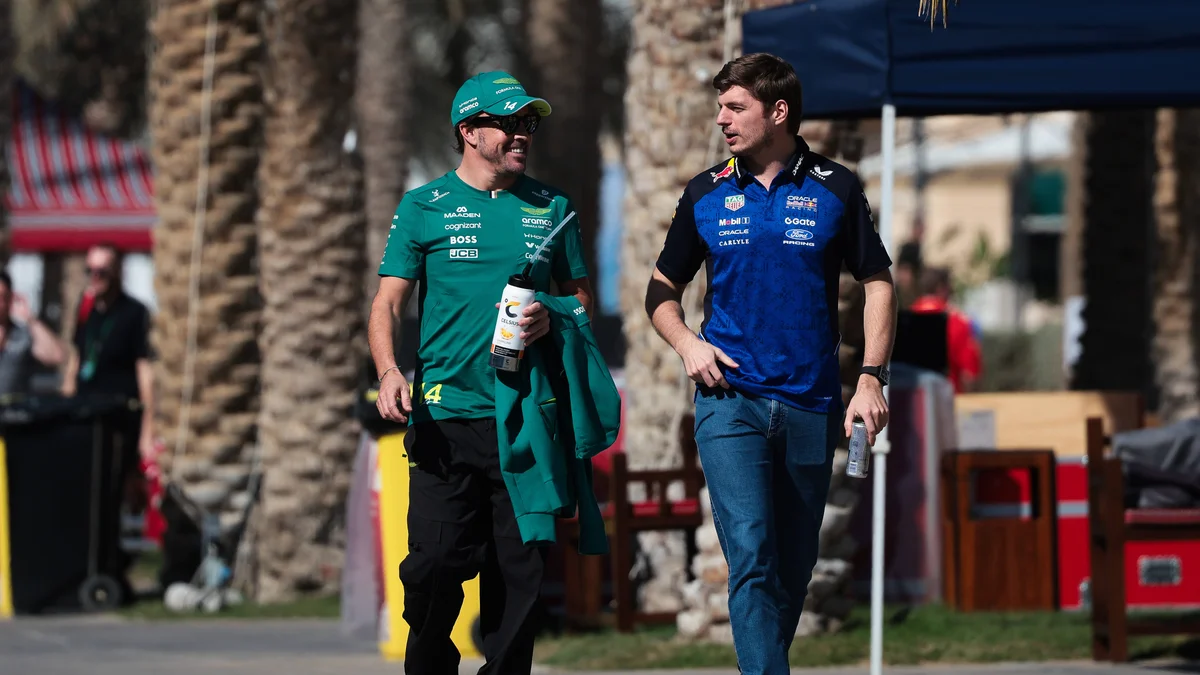
Fernando Alonso (Aston Martin) and Max Verstappen (Red Bull) during F1 testing in Bahrain. HochZwei/IMAGO
HochZwei/IMAGOThis article was generated by AI (gemini-2.5-flash). Learn more.