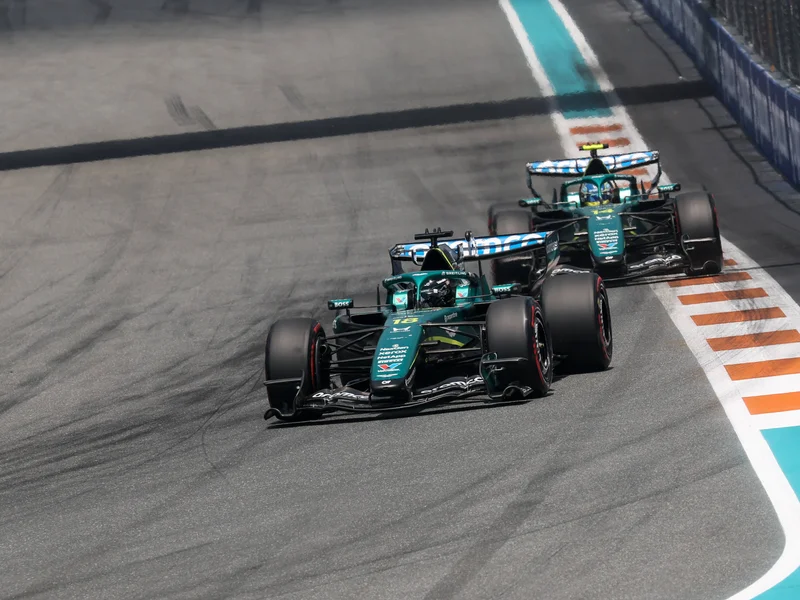
Aston Martin enters the European leg of the Formula 1 season facing a clear technical puzzle: a car that shows flashes of midfield pace on some layouts, but exposes its limitations brutally on others.
After six rounds of the new 2026 era, the team sits on just one point, scored by Fernando AlonsoPlayer·Fernando Alonso in Monaco, and even that owed as much to late-race incidents and penalties ahead as to outright speed. On pure performance over the weekend, Aston Martin remains on the fringes of the top 10 rather than a fixture in the points fight.
Against that backdrop, team ambassador and former Formula 1 driver Pedro de la RosaPlayer·Pedro de la Rosa offers a measured internal assessment. He believes that on specific types of circuit Aston Martin’s 2026 machine can operate as the fifth‑fastest chassis in the field, but concedes that the car drops further back when conditions or track characteristics expose its weaknesses.

The contrast is stark in Monaco. Traditionally a circuit that rewards mechanical grip and low-speed performance, Monte Carlo instead highlights a fundamental balance problem for the current Aston Martin. Both Alonso and Lance StrollPlayer·Lance Stroll struggle with pronounced understeer through the slow and medium-speed corners, particularly in the mid‑corner phase where the driver most needs the front end to bite.
Engineers cycle through a wide range of set‑up changes across the weekend in search of a solution. They adjust mechanical settings, aero balance and suspension geometry, but the understeer persists. According to De la Rosa, the team’s analysis indicates that the limitation runs deeper than configuration choices, pointing instead to core aspects of the chassis and aero platform.
At the same time, the Silverstone‑based squad is not dealing with the chassis in isolation. The 2026 switch to HondaTeam·Honda power units is proving challenging, with the Japanese manufacturer’s new engine understood to be the least competitive in the current field and affected by vibration issues when integrated into the Aston Martin package. Power unit deficits hurt straight-line performance; combined with a car that struggles to rotate cleanly in tight corners, the result is a narrow operating window in which the AMR chassis can shine.
That helps explain the team’s track‑to‑track volatility. On layouts where aero efficiency and medium-speed balance matter more than traction from slow hairpins, Aston Martin’s package appears closer to the upper end of the midfield. On tighter, more technical circuits, the same car slips back, with drivers fighting the front end and losing confidence on turn‑in.

De la Rosa stresses the importance of patience inside the organisation, but also outlines the technical roadmap. Aston Martin is working to interpret the new regulatory framework more effectively and to develop upgrade packages that provide a broader set of tools for the engineers and drivers. The goal is not just to add downforce, but to improve how the car responds to set‑up changes and to reduce its sensitivity to fuel load, tyre condition and track temperature.
Monaco therefore becomes more than a disappointing result; it is a diagnostic weekend. The team leaves the principality knowing that low‑speed rotation and front‑end grip must sit at the heart of upcoming development steps. With the next races featuring more conventional circuit layouts, Aston Martin will look for evidence that its baseline concept can support those upgrades rather than constrain them.
In a crowded midfield where small gains in stability and balance can translate into several grid positions, the margin between being the fifth‑best chassis on the right Sunday and sliding out of the points is thin. Aston Martin now faces the task of turning De la Rosa’s cautious optimism about the car’s potential into consistent, repeatable performance across the full calendar.
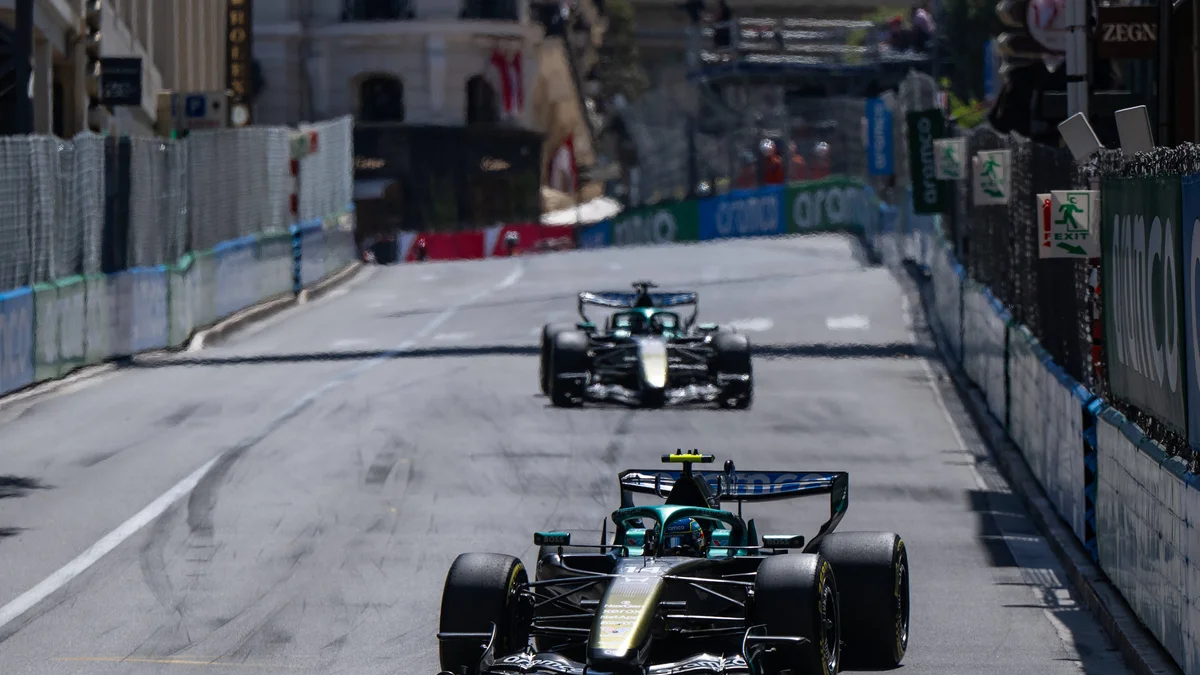
Fernando Alonso leads Lance Stroll in their Aston Martin F1 cars at the Monaco Grand Prix. Eibner/IMAGO
Eibner/IMAGOThis article was generated by AI (sonar-pro). Learn more.