The 2026 FIFA World CupCompetition·FIFA World Cup, set to unfold across the United StatesTeam·United States, CanadaTeam·Canada, and MexicoTeam·Mexico, marks a significant expansion in the tournament's storied history. With 48 teams competing in 104 matches from June 11 to July 19, 2026, the stage is larger than ever, prompting widespread discussion about the potential for a new nation to lift the coveted trophy.
Historically, only eight countries have ever claimed the men's FIFA World CupCompetition·FIFA World Cup title since its inception in 1930, with Spain being the most recent first-time champion in 2010. Current betting markets reflect this enduring pattern, with odds for a past winner to triumph again standing at approximately -280, while the prospect of a first-time winner is priced around +200. This suggests that while the possibility exists, the established footballing powers remain the favorites.
However, the expanded format, which now sees 32 nations advance to the knockout stage, is widely considered a factor that could introduce greater unpredictability. This increased volatility might open doors for teams that have historically fallen short. Among the nations with the shortest odds to secure their inaugural World Cup title, Portugal leads at +1000. Other notable contenders include the NetherlandsTeam·Netherlands (+2000), NorwayTeam·Norway (+3000), BelgiumTeam·Belgium (+3500), Colombia (+4000), and MoroccoTeam·Morocco (+5000). Co-host United StatesTeam·United States also holds an outside chance at +6000.

Several teams demonstrated compelling form during the 2025/26 qualifying season, positioning themselves as potential dark horses. NorwayTeam·Norway, for instance, topped their UEFA qualifying group, which included three-time winners Italy, winning all eight matches, scoring 37 goals, and conceding only five. Erling HaalandPlayer·Erling Haaland was a prolific scorer, netting 16 goals in qualifying. JapanTeam·Japan is also regarded as a complete dark horse, known for its elite club players, clear tactical identity, and strong recent tournament pedigree, including victories over Germany and Spain in the 2022 World Cup. Colombia, with talents like Luis DiazPlayer·Luis Diaz and James Rodriguez, finished second in CONMEBOL qualifying, ahead of traditional powerhouses Brazil and UruguayTeam·Uruguay. Reigning AFCONCompetition·AFCON champions Senegal and defensively solid SwitzerlandTeam·Switzerland (who conceded only two goals in six UEFA qualifying matches) are also highlighted.
The 2026 tournament will also feature a record number of debutants and returnees. Cape Verde, CuraçaoTeam·Curaçao, Jordan, and UzbekistanTeam·Uzbekistan are making their first appearances, with CuraçaoTeam·Curaçao becoming the smallest nation ever to qualify. Qatar, after its host debut in 2022, successfully qualified for the first time. Other nations returning after missing recent editions include the Czech RepublicTeam·Czech Republic, New Zealand, Paraguay, South AfricaTeam·South Africa, AlgeriaTeam·Algeria, Bosnia and Herzegovina, Ivory CoastTeam·Ivory Coast, EgyptTeam·Egypt, Panama, and SwedenTeam·Sweden. This edition marks the first time eight Arab nations have qualified.
Despite the potential for upsets, traditional footballing giants like Spain, France, EnglandTeam·England, and defending champions Argentina are consistently named among the leading contenders. Spain is currently favored by some analytical models with a 16.02% chance of winning, followed by France (12.54%) and EnglandTeam·England (10.66%). Argentina aims to become the first team to defend its crown since Brazil in 1962.
The expanded format, featuring 12 groups of four teams and an enlarged 32-team knockout phase, means a more arduous path to the final. Teams will need to secure five consecutive single-elimination victories, playing a total of eight matches to lift the trophy. This extended tournament could favor nations with exceptional squad depth and resilience. The presence of more teams from diverse confederations also promises a wider array of playing styles and increased potential for upsets, which could ultimately pave the way for a new champion.

Gregg BerhalterCoach·Gregg Berhalter, the USA coach, commented on the expanded World Cup, stating, "I think it's great for global soccer and growing the game. There's going to be 48 countries that are deeply invested in how their team does at the World Cup. It's going to be a new format and exciting for a lot of people. There's going to be teams that have probably never been to the World Cup going for the first time. So, I think it's exciting."
Youri DjorkaeffPlayer·Youri Djorkaeff, a France World Cup winner, also noted the significance of the North American hosting, saying, "It's the right time for the United StatesTeam·United States, CanadaTeam·Canada and MexicoTeam·Mexico, the right time for the entire continent of North America. They're ready for football. Here, we really have the sense that the World Cup in 2026 will be the starting point, the beginning of something."
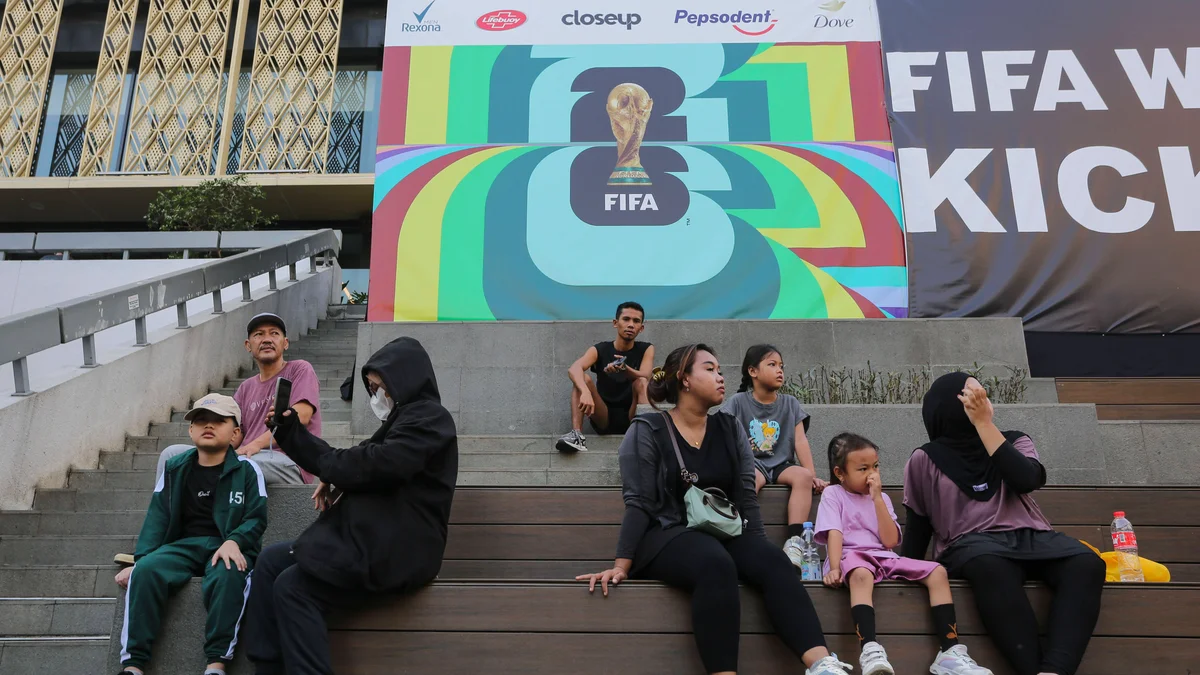
People attend a promotional event for the FIFA World Cup 2026 in Jakarta, Indonesia. NurPhoto/IMAGO
NurPhoto/IMAGOThis article was generated by AI (gemini-2.5-flash). Learn more.