Manchester UnitedTeam·Manchester United is currently engaged in substantial renovation work at Old Trafford, marking a pivotal period for the club as it prepares for its return to the UEFACompetition·UEFA Champions LeagueCompetition·Champions League. These upgrades, which include a complete pitch replacement for the first time in 14 years and an expansion of the team dugouts, are driven by a dual focus on player welfare and adherence to updated UEFA regulations.
The decision to completely dig up and replace the Old Trafford pitch underscores a commitment to player safety and optimal playing conditions. The previous season highlighted concerns regarding player welfare, particularly after Benjamin SeskoPlayer·Benjamin Sesko sustained an injury during a match against LiverpoolTeam·Liverpool, an incident attributed in part to the steep drop-off at the side of the pitch. While the pitch itself will not be lowered, it is being slightly extended, and enhanced protection will be installed around the perimeter to mitigate future risks. This extensive pitch overhaul also aims to improve water drainage, ensuring a consistently high-quality playing surface. Notably, this will be the final full pitch rebuild before Manchester UnitedTeam·Manchester United's proposed move to a new 100,000-seater stadium, for which the club has already secured a significant portion of land.
In parallel, both the home and away dugouts at Old Trafford are undergoing a significant revamp. This particular modification is a direct response to new UEFACompetition·UEFA Stadium Infrastructure Regulations, introduced in 2025, which mandate that team benches in the Champions LeagueCompetition·Champions League must accommodate a minimum of 20 people and be positioned at least four meters from the touchline. Previously, Old Trafford's dugouts were designed to seat only 16 individuals. The new design will expand each dugout to 21 seats, featuring a revised configuration of eight seats at the back, seven in the middle, and six at the front. Building work on these dugouts commenced in early July 2026 and is expected to be completed over several weeks.
These infrastructure developments coincide with Manchester UnitedTeam·Manchester United's successful 2025/26 Premier LeagueCompetition·Premier League campaign, which saw the club finish in third place with 71 points from 38 games. This performance secured their qualification for the UEFACompetition·UEFA Champions LeagueCompetition·Champions League for the 2026/27 season, marking their first participation since the 2023/24 season. Under the guidance of Michael Carrick, who took over midway through the season, United demonstrated impressive form in the latter half of the campaign, winning 12 of their final 17 matches and accumulating 41 points in 19 games after January 1 – a tally unmatched by any other Premier LeagueCompetition·Premier League side in that timeframe.
The broader vision for the club's infrastructure was articulated by Collette Roche, CEO of New Stadium Development, who commented on the ongoing regeneration project. "Being able to build so close to Old Trafford allows us to preserve the heritage, traditions and rituals that are so important to our fans," Roche stated. "We are committed to building a world-class stadium with our supporters, not just for them, with atmosphere, affordability and accessibility at the heart of our thinking." She further added, "This is a generational opportunity that is fully aligned with both local and national growth ambitions. Securing the right land for our new home has been absolutely critical, and the land we've acquired gives us the stage to deliver a truly world-class stadium that honours our past and is ready for our future."
The Old Trafford renovations, particularly the dugout expansion, are a direct consequence of Manchester UnitedTeam·Manchester United's qualification for the Champions LeagueCompetition·Champions League. Adhering to UEFACompetition·UEFA's updated Stadium Infrastructure Regulations is mandatory for clubs participating in Europe's elite club competition. The pitch replacement, while not solely driven by UEFACompetition·UEFA rules, is crucial for providing a high-quality playing surface for the demands of both domestic and European competitions, and to mitigate player injury risks. These stadium upgrades signify the club's commitment to meeting the highest standards as they re-enter top-tier European football.
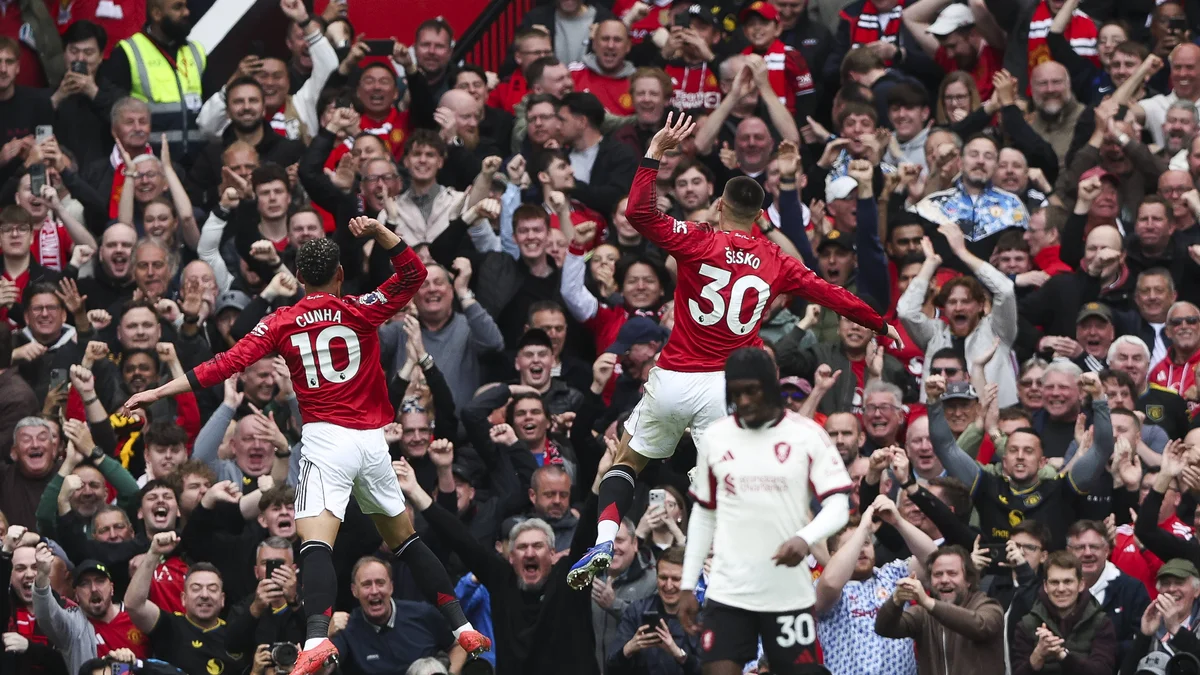
Benjamin Sesko celebrates scoring Manchester United's second goal against Liverpool. Credit: News Licensing/IMAGO
News Licensing/IMAGOThis article was generated with the help of AI. Learn more.