The Italian Football Federation (FIGC) has formally presented its list of 13 candidate host cities and 16 stadiums for the UEFA Euro 2032Competition·UEFA Euro 2032 tournament, a competition Italy will co-host with Turkey. This announcement follows the July 31st, 2026, deadline for the submission of comprehensive documentation, marking a crucial phase in the bid process.
The cities put forward by Italy include Bari, Bologna, Cagliari, Florence, Genoa, Lecce, Milan, Naples, Palermo, Rome, Salerno, Turin, and Verona. These dossiers are now under evaluation, with the FIGC tasked with narrowing down this extensive list to a final selection of five host cities, which must be submitted to UEFACompetition·UEFA by October 1st, 2026.
A primary challenge for Italy's bid lies in its aging stadium infrastructure. Many of the nation's venues require substantial renovations to meet UEFACompetition·UEFA's stringent standards, which encompass aspects such as lighting, seating accessibility, hospitality areas, safety systems, and the overall fan experience. This necessity for modernization has been a recurring theme throughout the preparatory stages.
In February 2026, a UEFACompetition·UEFA delegation, including CEO of UEFACompetition·UEFA Events SA Martin Kallen and Executive Director Michele Uva, conducted site visits across Italy to assess the progress of candidate venues. Their itinerary included inspections in Florence and Rome, alongside discussions with representatives from various cities and clubs, such as Milan, Palermo, Salerno, Genoa, Cagliari, and AS Roma, regarding their plans for new or upgraded stadiums.
Specific stadium situations highlight the complexities involved. Milan's Stadio Meazza, also known as San Siro, has reportedly failed certain UEFACompetition·UEFA tests, prompting the Milan city council to explore options for a new arena. This situation also puts pressure on AC MilanTeam·AC Milan and Inter Milan to advance their own new stadium projects, which are currently under investigation by the Italian Financial Police. In contrast, Turin expresses confidence in its hosting capabilities, largely due to JuventusTeam·Juventus' Allianz StadiumVenue·Allianz Stadium, a modern facility already meeting high standards.
Further south, Naples' city council has approved refurbishment works for the Stadio Diego Armando Maradona, while Napoli President Aurelio De Laurentiis has publicly stated his ambition to construct an entirely new stadium. Rome's iconic Stadio Olimpico is also slated for necessary upgrades to align with Euro 2032 requirements, concurrently with AS Roma's owners developing plans for a new venue. Notably, despite having relatively new stadiums, Bergamo and Udine, home to AtalantaTeam·Atalanta and UdineseTeam·Udinese respectively, were not included in the list of 13 candidate cities.
Beyond infrastructure, the bid has faced administrative scrutiny. Reports in April 2026 suggested that any placement of the FIGC under special administration could lead to severe repercussions from UEFACompetition·UEFA, potentially jeopardizing Italy's Euro 2032 bid and rendering Italian clubs ineligible for European competitions. This underscores the importance of stable governance within the federation.
FIGC President Gabriele Gravina previously conveyed optimism following UEFACompetition·UEFA's initial review, stating, "This momentum gives us reason for optimism." More recently, new FIGC President Giovanni Malagò has also addressed the significant undertaking that the Euro 2032 challenge represents for Italian football. The coming months will be critical as Italy works towards presenting its definitive selection to UEFACompetition·UEFA, aiming to showcase a revitalized infrastructure capable of hosting a premier international tournament.
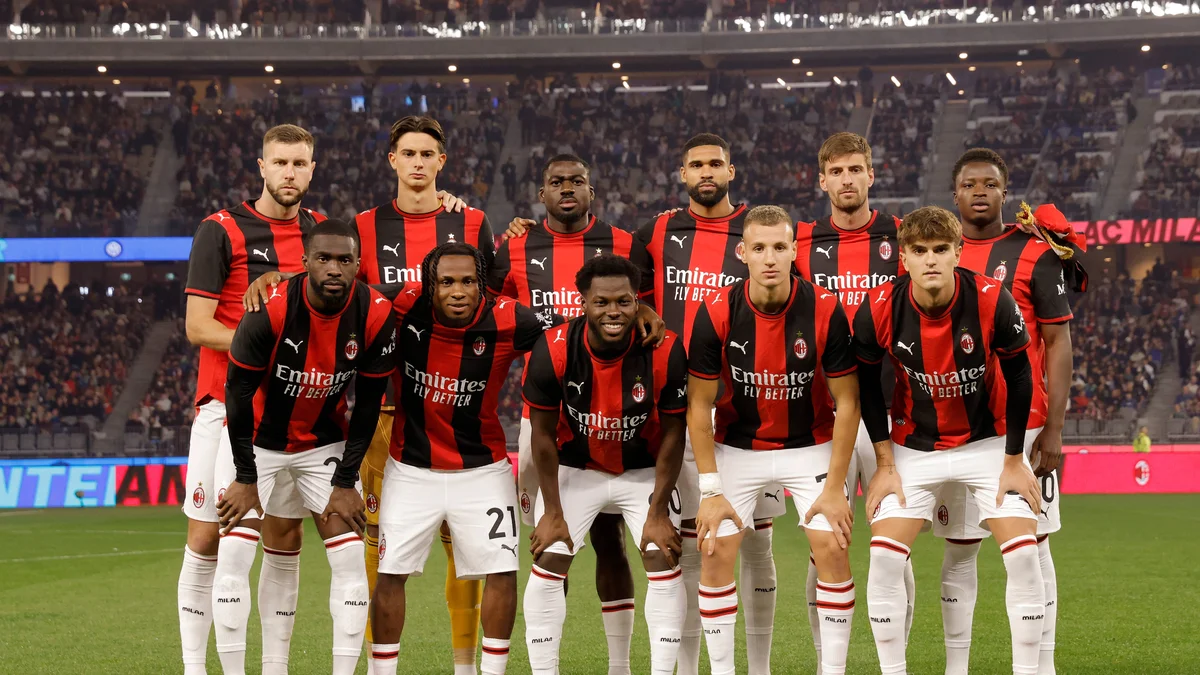
AC Milan players pose for a team photograph during an exhibition match against Inter Milan in Perth. AAP/IMAGO
AAP/IMAGOThis article was generated with the help of AI. Learn more.