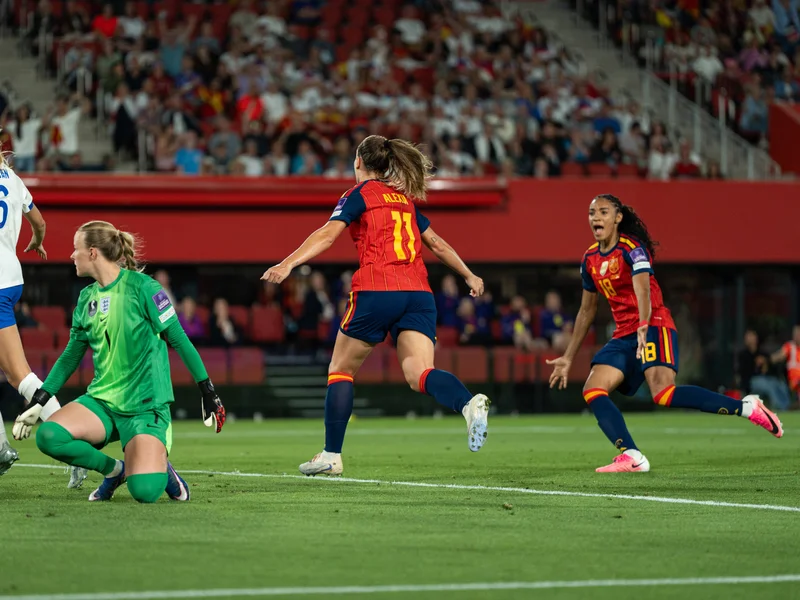
UEFA's Executive Committee approved the qualification system for EURO 2028 on Wednesday, establishing a structured pathway that merges traditional group qualifiers with UEFA Nations League performance for the 24-team tournament co-hosted by EnglandTeam·England, Scotland, WalesTeam·Wales and the Republic of IrelandTeam·Republic of Ireland.
The format divides 55 UEFA member associations into 12 groups of four or five teams each, played in home-and-away round-robin matches throughout 2027. The group stage draw takes place on 6 December 2026 in Belfast, Northern IrelandVenue·Belfast, Northern Ireland, with hosts seeded into separate groups to avoid direct clashes.
Twelve group winners secure direct qualification to the finals, joined by the eight best-ranked runners-up, totaling 20 teams. This leaves between two and four spots determined through play-offs in March 2028, depending on host nation performance.

A key innovation reserves two spots for the highest-ranked host nations—EnglandTeam·England, Scotland, WalesTeam·Wales or Republic of IrelandTeam·Republic of Ireland—that fail to qualify as group winners or top runners-up. These teams enter the play-offs alongside remaining group runners-up and top non-qualified group winners from the 2026-27 UEFA Nations League.
Play-off structures adapt dynamically: - If both host slots activate, eight teams form two paths with single-leg semi-finals and finals for two spots. - If one slot activates, 12 teams compete in three paths for three spots. - If no slots needed—all hosts qualify directly—eight teams play four home-and-away ties.
This safety net ensures co-hosts feature in the summer 2028 finals across nine venues in the UK and Ireland, from 9 June to 9 July, without automatic entry. The finals retain the familiar 24-team setup: six groups of four, top two plus four best third-placed teams advancing to the last 16, followed by single-elimination knockouts.
The system addresses prior criticisms of qualification imbalance by linking it to Nations League results, rewarding consistent performance across competitions. It reduces fixture congestion compared to expanded formats while maintaining competitiveness—group winners and top runners-up bypass play-offs, streamlining access for stronger sides.

For hosts, the format adds intrigue: EnglandTeam·England, recent major tournament regulars, must navigate groups alongside peers, with play-off protection as a backstop. Scotland, WalesTeam·Wales and Republic of IrelandTeam·Republic of Ireland gain similar assurance, fostering domestic excitement ahead of the showpiece event.
Qualifying aligns with the 2026-27 Nations League league phase conclusion, prioritizing its top performers for play-off seeding. This integration elevates the Nations League's stakes, as non-qualified winners vie for EURO spots against group runners-up.
National associations now prepare for the December draw, with tactical planning intensified by the hosts' separation and play-off variables. The approval, announced ahead of the Europa League final in Bilbao, signals UEFA's commitment to equitable, engaging European football pathways.
As EURO 2028 approaches, this format promises a merit-based finals field, blending group-stage rigor with high-stakes play-offs. Teams across the continent eye direct qualification, while Nations League campaigns gain renewed urgency.
This article was generated by AI (sonar-pro). Learn more.