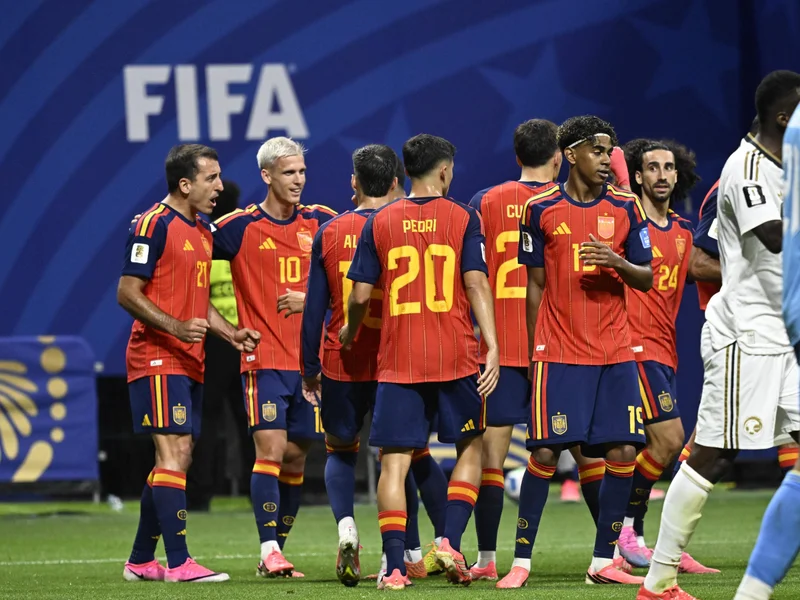
The sight of the Spanish national football team standing in solemn silence as "La Marcha Real" plays before international fixtures is a familiar one to fans worldwide. Unlike many other nations where players passionately vocalize their anthems, Spain's stars remain quiet, a practice that often sparks curiosity and, at times, misinterpretation. The fundamental reason for this distinctive tradition lies in the anthem itself: it has no official lyrics.
"La Marcha Real" boasts a rich history, originating as an 18th-century military march. While it did acquire lyrics during the dictatorship of General Francisco Franco between 1938 and 1975, these were deliberately removed following his death in 1975. This decision marked Spain's return to the traditional instrumental version, a move intended to distance the anthem from its politically charged past and foster national unity without controversy. Subsequent efforts to introduce new official lyrics have consistently failed to gain widespread national consensus. A notable attempt in 2007 by the Spanish Olympic Committee, which launched a public competition, ultimately proved unsuccessful due to significant criticism and a lack of agreement across the country.
As Spanish journalist Ainhoa Torres explained, the common assumption that players are making a political statement is often wide of the mark. "People often assume Spanish players refuse to sing the anthem as a political statement, but that is far from it. The reality is more nuanced. Our anthem has no official lyrics, so there are really no words for players to sing." This absence of official text means there is simply nothing for the players to vocalize, making their silence a practical rather than a political choice.
Beyond the primary reason of lyric absence, the diverse regional identities within Spain and historical political tensions can also subtly influence individual players' decisions. Regions such as Catalonia and the Basque Country have strong distinct cultural identities, and players from these areas have historically faced scrutiny regarding their regional origins. While not the primary driver, these underlying sentiments contribute to the nuanced context surrounding the anthem.
Despite this unique pre-match ritual, the Spanish national team, known as La Roja, continues to perform at an elite level. Under the guidance of coach Luis de la FuenteCoach·Luis de la Fuente, who led them to success in the 2023 UEFA Nations League and UEFA EuroCompetition·UEFA Euro 2024, Spain is enjoying a strong 2025/26 season. They currently lead their World Cup - Qualification Europe group with 16 points from six matches, maintaining an unbeaten record of five wins and one draw. Their recent form in the World Cup Qualifiers is DWWWW, underscoring their consistency. In the ongoing 2026 FIFA World CupCompetition·FIFA World Cup, Spain topped Group H and has progressed through the knockout stages with victories over Austria, Portugal, and BelgiumTeam·Belgium, setting up a semi-final clash against France on July 14, 2026. Key players like captain RodriPlayer·Rodri, Lamine YamalPlayer·Lamine Yamal, Mikel MerinoPlayer·Mikel Merino, Unai SimónPlayer·Unai Simón, Ferran TorresPlayer·Ferran Torres, Dani OlmoPlayer·Dani Olmo, and Nico WilliamsPlayer·Nico Williams are central to their success. Spain also ended 2025 atop the FIFA/Coca-Cola Men's World Ranking and currently stands at 2nd globally as of June 11, 2026, solidifying their status as a formidable force in international football.
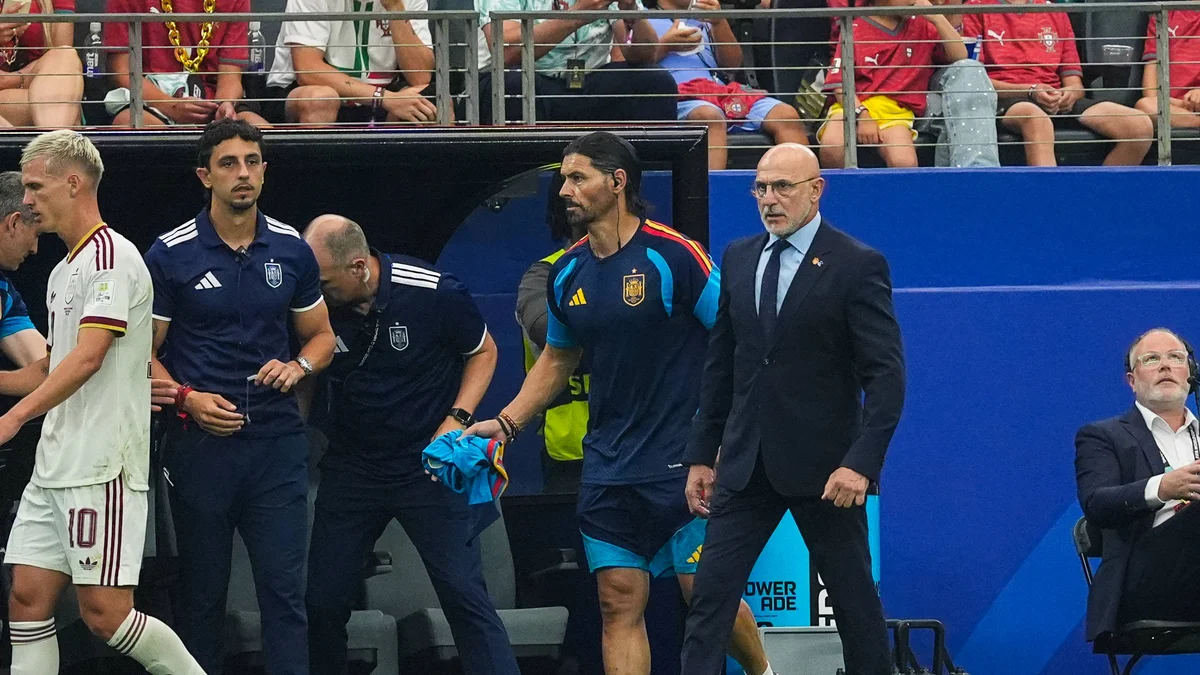
Spain's coach Luis De La Fuente at the FIFA World Cup 2026. Credit: @odysseyimg/IMAGO
@odysseyimg/IMAGOThis article was generated by AI (gemini-2.5-flash). Learn more.