The anticipation surrounding the 2026 FIFA World CupCompetition·2026 FIFA World Cup is palpable, particularly for Portugal, as legendary forward Cristiano RonaldoPlayer·Cristiano Ronaldo embarks on what is widely expected to be his final appearance on football's grandest stage. At 41 years old, Ronaldo has unequivocally stated his intention for this to be his last World Cup, signaling his ambition with a clear message on social media: "The World Mission begins!"
Portugal arrives at the tournament in formidable form, having secured direct qualification by winning UEFACompetition·UEFA Group F with a commanding 9-1 victory over ArmeniaTeam·Armenia in November 2025. Under the guidance of manager Roberto Martinez, who took charge in 2023, the national team has undergone a significant transformation. Martinez boasts a win percentage approaching 70 percent, overseeing an impressive scoring rate and one of the nation's longest winning streaks. This resurgence culminated in June 2025, when Portugal clinched their second UEFA Nations League title, defeating Spain 5-3 on penalties in a hard-fought final.
The squad depth is a testament to Portugal's current strength, featuring a blend of seasoned veterans and emerging talents. Key players such as Bruno FernandesPlayer·Bruno Fernandes, Bernardo SilvaPlayer·Bernardo Silva, VitinhaPlayer·Vitinha, João Neves, Rafael Leão, Rúben Dias, and João Cancelo form a formidable core. The midfield, in particular, has become a significant asset, with Paris Saint-GermainTeam·Paris Saint-Germain duo VitinhaPlayer·Vitinha and João Neves developing into elite performers, while Bruno FernandesPlayer·Bruno Fernandes continues to provide crucial creativity and leadership.

Adding to the national excitement is a fascinating historical trend that has captured the imagination of supporters. Portugal has repeatedly found success whenever a major international competition introduces a new format or structure. This pattern began at Euro 2016Competition·Euro 2016, when UEFACompetition·UEFA expanded the European Championship from 16 to 24 teams. Portugal navigated the new structure, advancing from the group stage despite drawing all three matches, and ultimately defeated France in the final to secure their first major international trophy.
The trend continued with the inaugural UEFA Nations League in 2019, where Portugal became the first nation to lift the trophy after overcoming the NetherlandsTeam·Netherlands in the final. A third instance emerged in 2025, when UEFACompetition·UEFA introduced a new quarter-final stage to the Nations League, a format Portugal adapted to successfully, capturing the title after defeating Spain. This sequence has fueled growing optimism, as the 2026 FIFA World CupCompetition·2026 FIFA World Cup itself will feature a major transformation, expanding from 32 teams to 48 teams and introducing a Round of 32 knockout phase.
Portugal has been drawn into Group K for the 2026 World Cup, alongside the Democratic Republic of Congo, UzbekistanTeam·Uzbekistan, and Colombia. While Martinez's side enters the group as clear favorites, Colombia is anticipated to provide a stern challenge. Winning the group could offer a more favorable path through the knockout stages, potentially leading to encounters with teams like CanadaTeam·Canada, SwitzerlandTeam·Switzerland, or Italy in the Round of 16, before possible clashes against footballing giants such as Argentina, Brazil, EnglandTeam·England, or France in later rounds. This journey would undoubtedly test the full extent of Portugal's squad depth and championship credentials.
With Cristiano RonaldoPlayer·Cristiano Ronaldo chasing the only major trophy missing from his illustrious collection, Roberto Martinez overseeing one of Portugal's most successful eras, and an expanded World Cup presenting fresh opportunities, there is every reason for belief within the Portuguese camp.
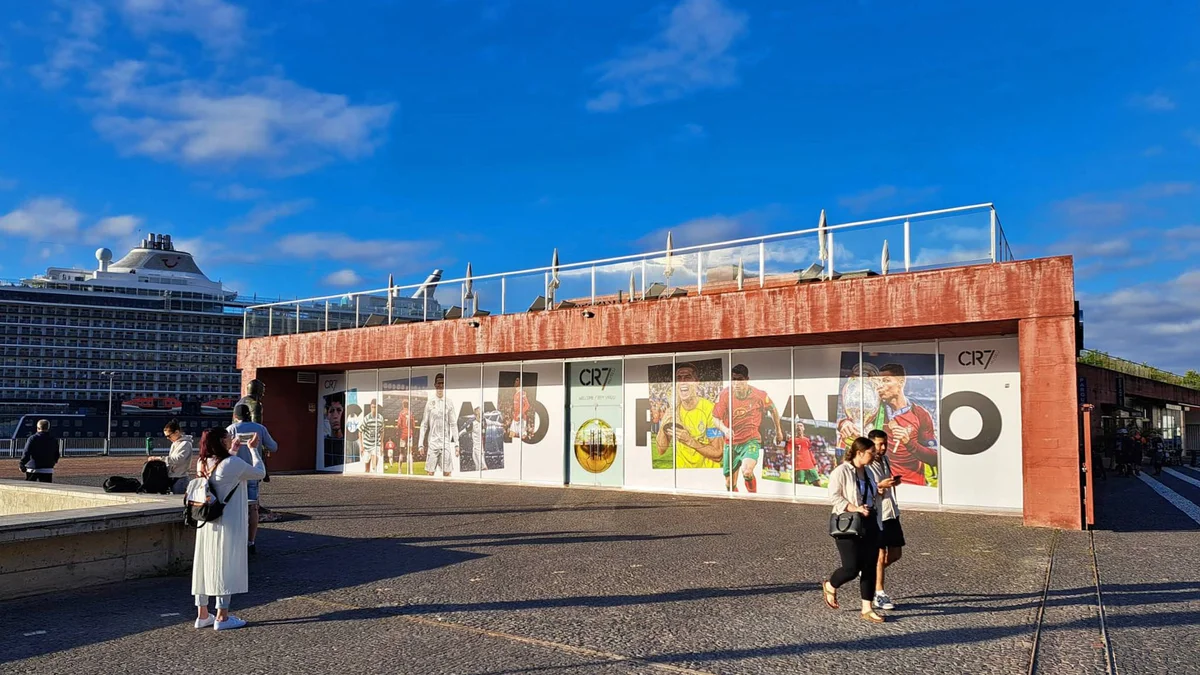
The Cristiano Ronaldo Museum in Madeira, Portugal, dedicated to the football superstar. (MIS/IMAGO)
MIS/IMAGOThis article was generated by AI (gemini-2.5-flash). Learn more.