The Champions LeagueCompetition·Champions League, Europe's crown jewel of club football, is on the cusp of a seismic shift off the pitch—one that strikes at the heart of its storied identity. After 25 years of Adidas dominance, UEFA has launched a high-stakes tender process for the official match ball supplier starting from the 2027-28 season, opening the door for Nike to swoop in and orchestrate a radical redesign. Gone, potentially, are the familiar star-paneled orbs that have rolled across the turf in Munich's Allianz Arena, Madrid's BernabéuVenue·Bernabéu, and London's WembleyVenue·Wembley, symbols of glory for legends like Messi, Ronaldo, and Haaland.
This isn't mere cosmetic tinkering; it's a financial bidding war fueled by the tournament's colossal global pull. Last season alone, the Champions LeagueCompetition·Champions League captivated 1.18 billion viewers worldwide, a viewership bonanza that UEFA, in partnership with Relevent Football Partners and the UC3 joint venture (UEFA and European Club Association), is determined to monetize to the hilt. The tender covers the flagship competition, with options to bundle in the Europa LeagueCompetition·Europa League and Conference LeagueCompetition·Conference League—currently under Decathlon's stewardship—awarding rights to the highest bidder. Adidas, the incumbent since wresting control from Nike back in 2001, is 'highly motivated to retain' its grip, but whispers from The Athletic suggest Nike's ambitions run deep, eyeing not just the ball but a broader Champions LeagueCompetition·Champions League footprint.
Imagine the implications: Nike, masters of innovation from the Premier League to the NBA, could infuse the ball with sleek, aerodynamic panels, vibrant colorways, and tech-embedded designs optimized for broadcast clarity and player grip. PumaTeam·Puma, too, lurks as a dark horse, hungry to expand its football portfolio beyond national teams. This commercial colossus underscores UEFA's ruthless revenue model—over 97% of net earnings funneled back into the game, with club competitions like the UCL devouring the lion's share. For the 2024-27 cycle, gross revenues are pegged at €4.4 billion, netting €3.548 billion for distribution after costs, split into equal shares, performance pots, and market pools. A new supplier could supercharge this, injecting fresh millions into prize money that fuels squad builds at Real Madrid, Manchester City, and Bayern Munich.

Tactically, the ball is no afterthought. Its texture, weight, and flight path influence everything from set-piece execution to open-play transitions. Adidas' stars provided that signature spin for curling free-kicks; a Nike overhaul might prioritize speed for counter-attacks, tilting edges toward possession-heavy sides like Pep Guardiola's City or Xabi Alonso's Leverkusen. Key moments in UCL history—the 2005 Istanbul miracle, Liverpool's 2019 comeback—were etched with Adidas spheres. A redesign risks diluting that legacy, yet promises evolution, much like the Swiss system's format shake-up amplified drama.
Standings-wise, the ripple effects loom large. Boosted revenues mean richer solidarity payments for non-qualifiers, youth academies, and grassroots schemes—vital for mid-table Premier League stragglers or Bundesliga battlers chasing European spots. Top clubs, already swimming in €670 million starting fees and €914 million performance bonuses, stand to gain most, widening the chasm in the 'financial landscape of European football.' Critics decry it as prioritizing wallets over romance, but in an era of state-backed behemoths, UEFA's pragmatism is tactical genius.
As bids escalate, the end of Adidas' monopoly feels inevitable. Nike's potential entry heralds an iconic star ball redesign, blending commerce and culture in a move that could make the 2027-28 UCL feel reborn. Football fans, brace yourselves: the beautiful game's most recognizable prop is about to evolve, carrying dreams of glory into a new era.
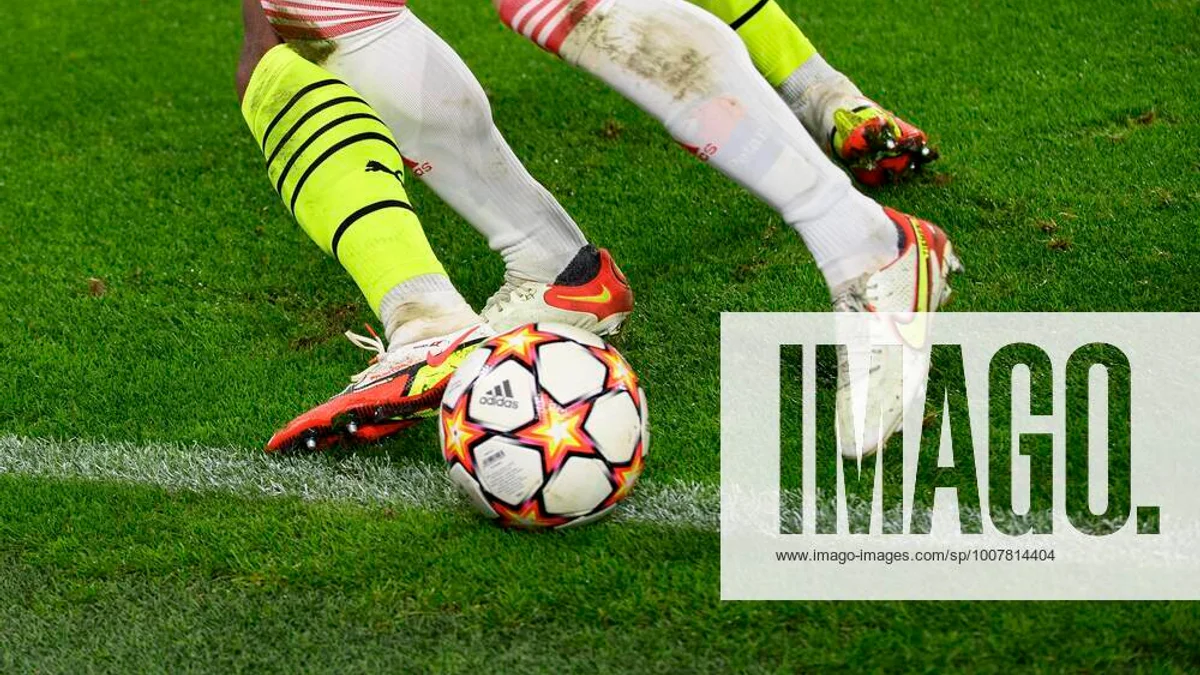
An official Champions League match ball in action during a game between Borussia Dortmund and Ajax. Sven Simon/IMAGO
Sven Simon/IMAGOThis article was generated by AI (sonar-pro). Learn more.