In a move that reverberates through the corridors of European football's commercial powerhouse, Nike is locked in exclusive negotiations to become the official match ball supplier for UEFA's men's Champions LeagueCompetition·Champions League, Europa LeagueCompetition·Europa League, and Conference LeagueCompetition·Conference League. This seismic shift, confirmed by UC3Competition·UC3—the joint venture between UEFA and the European Club Association—signals the end of Adidas's 25-year stranglehold, which began in the 2001-02 season after ousting Nike from the role they held until 2000-01.
The tender process, launched in March 2026 and overseen by UC3Competition·UC3 alongside Relevent Football Partners, saw Nike emerge as the frontrunner. Talks, now in their final stages, cover the 2027-28 to 2030-31 cycles, bundling all three competitions for the first time. Adidas will fulfill its obligations through the 2026-27 Champions LeagueCompetition·Champions League season, while KipstaTeam·Kipsta (Decathlon's brand) handles the Europa and Conference Leagues until then. The potential deal's value? A staggering €40 million-plus annually—roughly double previous cycles—reflecting UEFA's aggressive push for revenue growth amid a broader 2027-31 rights sales strategy targeting a 10% uplift on the current €3.8 billion yearly club rights pot.
This isn't just about balls rolling across pitches in 531 matches per season; it's a tactical masterstroke in the escalating Nike-Adidas rivalry. Adidas, creators of legendary designs like the Champions LeagueCompetition·Champions League's unmistakable white-and-gold spheres, issued a poignant farewell: proud of forging "the most iconic ball range of all time." Yet, their decision not to renew opens the door for Nike to reclaim premium European football branding, a market they've eyed since losing it a quarter-century ago. Imagine Nike's swoosh etched on every Champions LeagueCompetition·Champions League touchline, viewed by 1.2 billion fans last season alone—pure visibility gold for a brand grappling with sales dips in China and inventory woes.

Tactically, the implications ripple into the heart of Europe's grandest stage. The Champions LeagueCompetition·Champions League ball isn't mere equipment; it's the pulse of high-stakes drama, from pinpoint free-kicks curving into top corners to desperate clearances under floodlights. Adidas's reign coincided with tactical evolutions—from Total Football fluidity to modern high-pressing Gegenpress—where ball design influenced spin, flight, and predictability. Nike's return could usher in innovations tailored to the data-driven era: panels optimized for xG-maximizing set-pieces, aerodynamics suiting possession-dominant sides like those wielding 60%+ ball control in knockout ties. Picture a Real MadridTeam·Real Madrid counter exploding with a Nike ball slicing through Manchester CityTeam·Manchester City's press, or ArsenalTeam·Arsenal's build-up play enhanced by superior grip in wet Turin nights.
Key moments define legacies, and this switch arrives at a pivotal juncture. With the 2026-27 season as Adidas's swan song, clubs jockeying for standings supremacy—think Bayern's Bundesliga grind or LiverpoolTeam·Liverpool's Premier League title tilt—will adapt to transitional chaos. A new ball mid-cycle risks teething issues: goalkeepers recalibrating dives, midfield maestros adjusting first touches. Yet, history shows resilience; tactical contexts evolve, as seen in past supplier changes where elite teams like BarcelonaTeam·Barcelona under Pep Guardiola turned equipment shifts into dominance fuel.
Standings implications? Indirect but profound. Higher UEFA revenues mean richer prize pots—75% already funneled to Champions LeagueCompetition·Champions League clubs—bolstering squads for transfer windows. Nike's deeper pockets could sponsor youth academies or stadium tech, indirectly shaping on-pitch battles. Analysts temper the hype: M Science's Drake MacFarlane sees medium-term gains for Nike, not instant fixes, while Morningstar's David Swartz insists no sponsorship cures product innovation gaps against disruptors like On and Hoka.
This is more than corporate chess; it's the commercialization of football's soul. Ending Adidas's quarter-century era marks UEFA's bold pivot, blending Nike's marketing muscle with the competition's aura. As negotiations near fruition, one truth endures: in the Champions LeagueCompetition·Champions League, where every bounce can rewrite histories, the ball truly is the game.
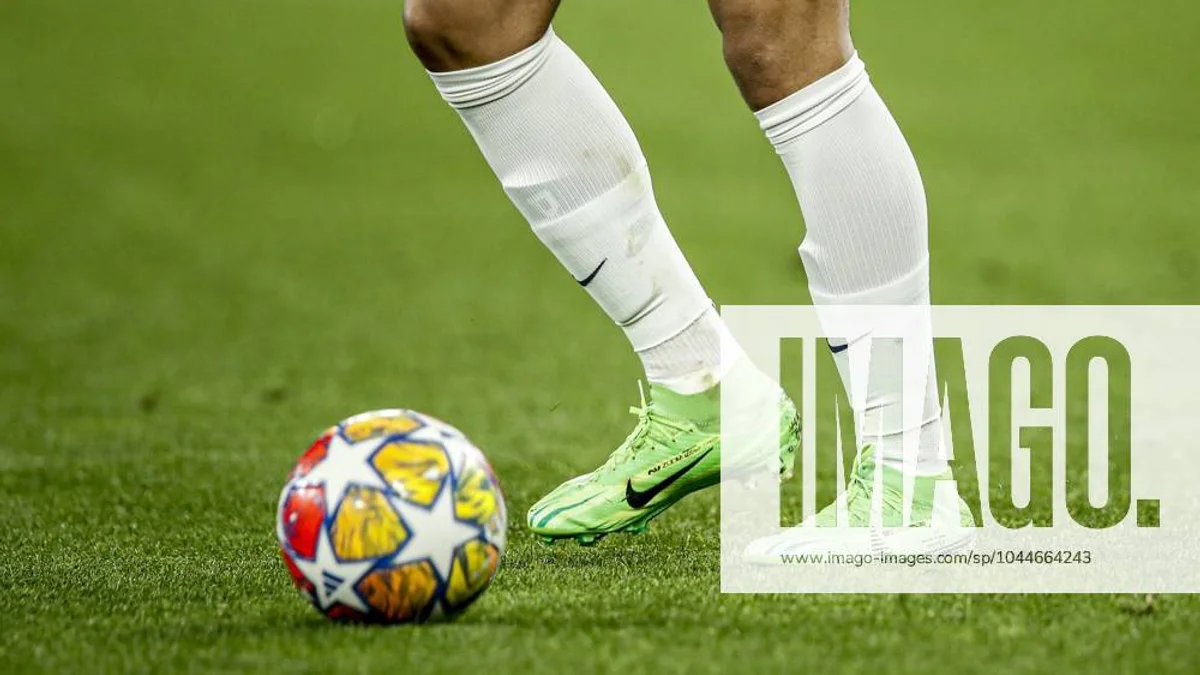
Kylian Mbappe's Nike Superfly 9 Elite Mercurial Dream Speed boots during a Champions League semi-final. (ANP/IMAGO)
ANP/IMAGOThis article was generated by AI (gemini-2.5-flash). Learn more.