Liverpool have placed Dietmar HamannPlayer·Dietmar Hamann among the club’s greatest players, spotlighting the German’s seven-year spell at Anfield and his central role in some of the modern era’s most defining nights.
Arriving from Newcastle UnitedTeam·Newcastle United in 1999, Hamann quickly becomes a fixed point at the base of Liverpool’s midfield. His game intelligence, positional discipline and reading of danger allow more attacking teammates to advance, safe in the knowledge that the space behind them is controlled. Described by the club as a reassuring presence in the middle of the pitch, he repeatedly snuffs out opposition attacks and turns interceptions into launching points for Liverpool’s own moves.
Across those seven seasons, Hamann’s influence extends well beyond simple protection of the back four. While primarily a defensive midfielder, he carries a threat from distance, capable of thundering shots from outside the box. Most of his 11 goals for the club come via powerful strikes, underlining a technical quality that complements his combative edge.

Hamann’s importance is evident early in his Liverpool career. Signed by Gérard Houllier, he plays a key part in the treble-winning campaign of 2000-01, when Liverpool secure the League Cup, FA CupCompetition·FA Cup and UEFA CupCompetition·UEFA Cup. In that remarkable season he appears 53 times in all competitions and starts in each of the three cup finals, providing the structural balance that allows Liverpool to manage tight knockout ties and thrive in pressurised moments.
The recognition now afforded to Hamann also traces his value across managerial eras. When Rafael Benítez takes charge in 2004, the German’s role does not diminish. Instead, his tactical discipline and big‑game temperament become central to one of the club’s most storied comebacks.
Nowhere is his influence more vividly felt than in the 2005 Champions LeagueCompetition·Champions League final against AC MilanTeam·AC Milan in Istanbul. With Liverpool trailing 3-0 at half-time, Benítez turns to Hamann. Introduced at the interval, he helps change the complexion of the match. Sitting in front of the defence, he breaks Milan’s rhythm, closes passing lanes and gives Liverpool a platform to push forward with greater security. From that base, the team recover to 3-3 and force extra time before ultimately claiming the European Cup on penalties.
Hamann later reveals he finishes the contest with a broken foot, an injury he carries without losing control or composure. The drama extends into the shootout, where he is one of four Liverpool players to step up from the spot. He converts his penalty with a cool finish inside the left post, setting the tone in a situation where a single miss can decide a European title.

The club’s retrospective also revisits his impact in the 2006 FA CupCompetition·FA Cup final in Cardiff. Once again Hamann comes off the bench and again the pattern of the match shifts in Liverpool’s favour. The game eventually goes to penalties against West Ham UnitedTeam·West Ham United, and, fittingly, his final act as a Liverpool player is to score from the spot in another shootout victory.
Taken together, these moments define why a defensive midfielder commands such prominence in a list of Liverpool’s greatest players. Hamann’s contribution is rarely about headline numbers or individual awards. Instead, it lies in control of tempo, anticipation of danger and an ability to raise his level when the stakes are highest. He shapes games from the background, providing the platform on which Liverpool build both domestic and European success.
In celebrating Hamann within their historical rankings, Liverpool underline the enduring value of the deep‑lying midfielder in elite competition. His story reinforces a recurring theme in the club’s modern history: that many of their most significant triumphs rest on the quiet authority of those who patrol the centre of the pitch, setting the terms on which the game is played.
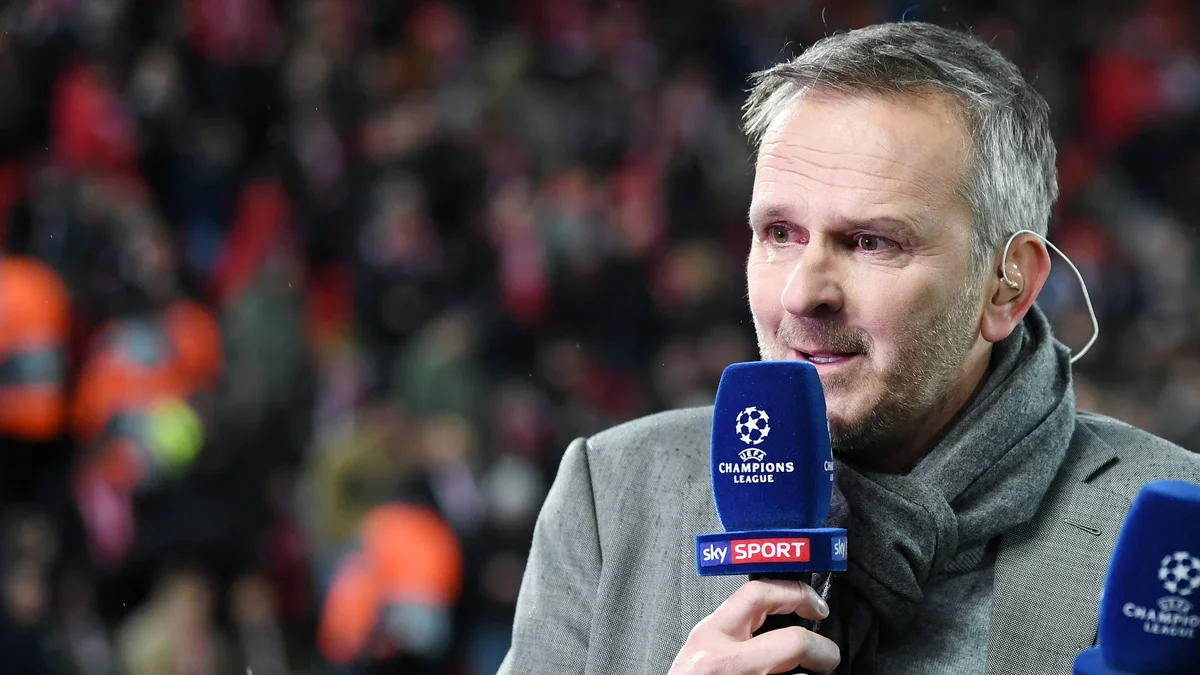
Dietmar Hamann, a football pundit, at a Champions League match in 2019. Credit: ULMER Pressebildagentur/IMAGO
ULMER Pressebildagentur/IMAGOThis article was generated by AI (sonar-pro). Learn more.