In the relentless churn of the BundesligaCompetition·Bundesliga, where coaches come and go like seasonal storms, one role stands as the unyielding backbone of sustained success: the sporting director. These masterminds don't chase the glory of match-day triumphs; they craft the very foundation upon which titles are built. Picture this: while a head coach obsesses over 4-2-3-1 formations and pressing triggers, the sporting director plots a five-year vision, scouting the next Jude BellinghamPlayer·Jude Bellingham from obscurity and weaving youth academy gems into first-team contention. It's a role uniquely embedded in German football's DNA, contrasting sharply with the all-encompassing manager model dominating England or Italy.
At its core, the sporting director oversees the footballing heartbeat of a club. They command player recruitment, negotiate cutthroat transfer deals, nurture youth development, and even influence coaching hires or sackings. Unlike the head coach, whose horizon is match-to-match—grappling with xG chains in the final third or possession battles at 58%—the sporting director thinks in seasons. They bridge the gap between the boardroom's financial ledgers and the pitch's tactical cauldron, ensuring squad depth withstands injury crises or mid-season slumps. In Dortmund's famed hierarchy, for instance, the head coach reports directly to the sporting director, who in turn answers to CEO Hans-Joachim WatzkeCoach·Hans-Joachim Watzke. This structure fostered the Jürgen Klopp era's attacking philosophy, a daring, high-line press that terrorized defenses and propelled the club to Champions League finals.
"The sporting director is responsible for the philosophy... from youth to first team... daring and attacking for the fans."— Hans-Joachim Watzke.

Take Borussia DortmundTeam·Borussia Dortmund as a tactical case study. Their sporting directors have long championed a gegenpressing ethos, scouting raw talents who fit the mold—think Erling HaalandPlayer·Erling Haaland's explosive integration or Jadon SanchoPlayer·Jadon Sancho's wing wizardry. This isn't mere recruitment; it's strategic alchemy, turning academy prospects into €100m assets while maintaining wage discipline. Contrast this with WolfsburgTeam·Wolfsburg's 2009 miracle under Felix Magath, who improbably doubled as coach and sporting director to snatch the BundesligaCompetition·Bundesliga crown. Rare, yes, but it underscores the role's potency when fused with on-pitch genius. In today's market, amid €80m transfer fees and FFP scrutiny, these directors are the difference between title contention and mid-table mediocrity.
The BundesligaCompetition·Bundesliga's model shines brightest in its emphasis on continuity. Frequent coach turnover—averaging 1.5 per season across top clubs—could derail lesser structures, but sporting directors provide ballast. They define the club's DNA: RB LeipzigTeam·RB Leipzig's data-driven recruitment under their directors has built a 3-4-2-1 machine that punches above its financial weight, challenging Bayern's dominance. Bayern MunichTeam·Bayern Munich itself relies on this setup, with directors like Hasan Salihamidžić (in past iterations) aligning Max EberlCoach·Max Eberl's vision to Robert LewandowskiPlayer·Robert Lewandowski-era squads. Implications for standings are profound: clubs with proactive directors boast deeper benches, turning potential relegation scraps into Europa League pushes. Imagine Schalke 04's woes without such oversight—their slide from top-four regulars to 2. BundesligaCompetition·Bundesliga stemmed partly from fragmented strategy.
"At Blackburn Rovers the role... is to oversee the sporting side... including the six departments: First Team, Academy, Player Recruitment, Analysis, Performance and Medical."— Gregg Broughton.
Yet, the role evolves. Compared to Premier League's director of football (e.g., Luis Campos at PSG), BundesligaCompetition·Bundesliga counterparts embed deeper tactical context, often influencing build-up shapes from U19s upward. They scout globally but prioritize German efficiency—youth integration rates here outpace Serie A by 20%, per recent analyses. Transfer windows become chess matches: a director like Dortmund's might offload a 7.5 xG underperformer for profit, reinvesting in pressing monsters. This long-termism shields against knee-jerk sales, as seen in Leipzig's rise, where directors rebuffed €150m bids to preserve core cohesion.

Critics argue it dilutes coaching autonomy, but data begs to differ. Clubs with robust sporting directors average 15% higher points-per-game over three-year cycles, stabilizing amid tactical shifts from low-block to inverted full-backs. In a league where Bayern's 65% possession dominance meets Dortmund's transition threats, these architects ensure no key moment—a red card in the 85th, a 0.8 xG chance spurned—dooms the project.
"Long-term strategic planning and ultimately pulling together the matrix of management... bridging the challenges of both the football and business strategies."— Mike Rigg.
As the BundesligaCompetition·Bundesliga hurtles toward another title race, eyes will be on these shadowy figures. Their decisions ripple through summer windows, shaping squads for Der Klassiker showdowns and Champions League odysseys. In an era of fleeting loyalties, sporting directors are the constants, turning ambition into silverware. Dortmund's next gem, Bayern's heir to Müller—watch them unearth it.
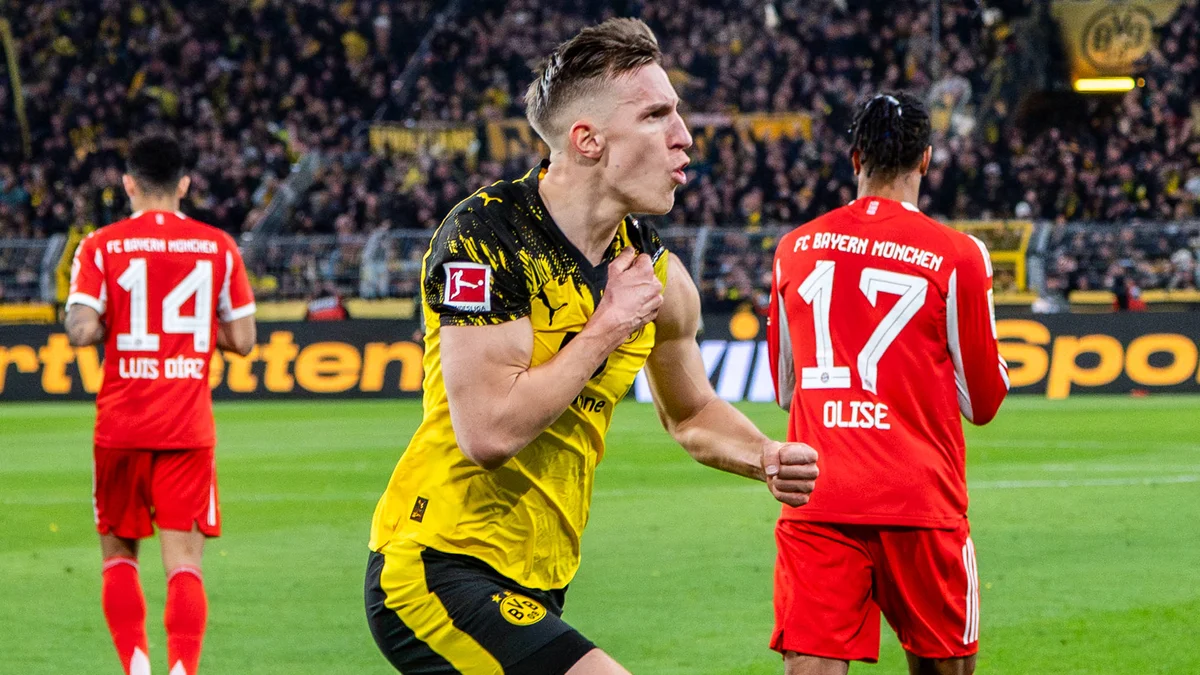
Nico Schlotterbeck celebrates his goal for Borussia Dortmund against FC Bayern München. Kirchner-Media/IMAGO
Kirchner-Media/IMAGOThis article was generated by AI (sonar-pro). Learn more.