James HardenPlayer·James Harden's second-half passivity defined Game 2 of the Eastern Conference semifinalsCompetition·Eastern Conference Semifinals, where the Detroit PistonsTeam·Detroit Pistons' suffocating defense left the Cleveland CavaliersTeam·Cleveland Cavaliers trailing 0-2 in the best-of-seven series.
Harden finished with 10 points on 3-of-13 shooting, committing four turnovers—more than his made field goals. He attempted only three shots after halftime, including one in the fourth quarter, as Cleveland fell behind the top-seeded Pistons. Detroit, who posted a league-best 60-22 regular-season mark, has turned these playoffs into a masterclass in team defense, inducing mental fatigue on opponents by closing every driving lane and contesting every jumper.
To watch the Pistons is to witness the pinnacle of NBA defensive schemes. Opponents cycle through primary creators, secondary options, and even tertiary ball-handlers in mounting desperation, yet Detroit rotates seamlessly to deny clean looks. Even when the Pistons dip deep into their bench, the pressure persists, forcing offenses into low-percentage heaves or costly mistakes. For Harden, a 23.6-point scorer across 70 regular-season games after his February trade to Cleveland from his prior team, this series exposes playoff vulnerabilities that have shadowed his career.


In Game 2 on May 7, Harden's struggles amplified Cleveland's broader offensive woes. The fourth-seeded Cavaliers, who earned their semifinal spot with a 52-30 regular-season record, shot poorly from the field and turned it over repeatedly against Detroit's length and discipline. Coach Kenny Atkinson shouldered blame for Harden's limited late-game usage, pointing to schematic adjustments amid the Pistons' rim protection and switchability.
"I mean, it's me... It's a team game. If the ball's moving and we're getting shots, that's for the betterment of the team," Harden said postgame. He added that he prioritizes "picking and choosing my spots and figuring out what works and what doesn't work for the betterment of the team."
The mental toll on NBA offenses against Detroit cannot be overstated. Cleveland's stars, including Harden, face constant closeouts and help rotations that eliminate the pick-and-roll rhythm he once weaponized. This series underscores why the Pistons topped the East: their defense doesn't just stop plays—it breaks offenses psychologically, leading to hesitation and hero-ball attempts.
Game 3 shifts to Cleveland, where the Cavaliers must rediscover spacing and ball movement to avoid a 0-3 deficit. Detroit's dominance positions them as legitimate title threats, while Harden's postseason narrative hangs in the balance. A bounce-back requires exploiting mismatches early and sustaining offensive flow against a unit that concedes the fewest points per possession in these playoffs.
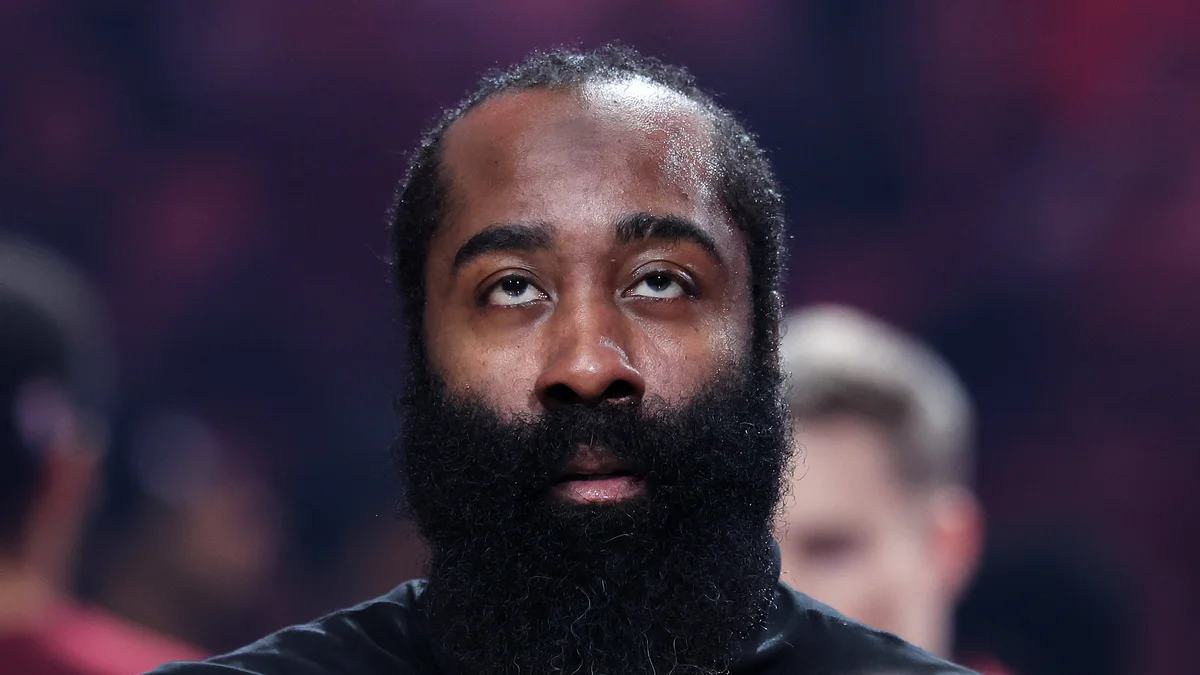
James Harden (1) of the Cleveland Cavaliers takes the court against the Detroit Pistons. UPI Photo/IMAGO
UPI Photo/IMAGOThis article was generated by AI (gemini-2.5-flash). Learn more.