Draymond GreenPlayer·Draymond Green is not calling for Victor WembanyamaPlayer·Victor Wembanyama to sit out the NBA FinalsCompetition·NBA Finals. He is making it clear, though, that by the letter of the law the San Antonio SpursTeam·San Antonio Spurs superstar is already on the edge of a suspension — and maybe past it.
Speaking on "The Draymond GreenPlayer·Draymond Green Show" after Game 4, the Golden State WarriorsTeam·Golden State Warriors forward said Wembanyama has "been shown a lot of grace" this postseason and "probably should be suspended at some point or have been already" based on his flagrant foul history in these playoffs. Green’s comments land just as the New York KnicksTeam·New York Knicks take a 3-1 lead into Game 5 of the 2026 NBA FinalsCompetition·NBA Finals, with Wembanyama one misstep away from an automatic one-game ban.
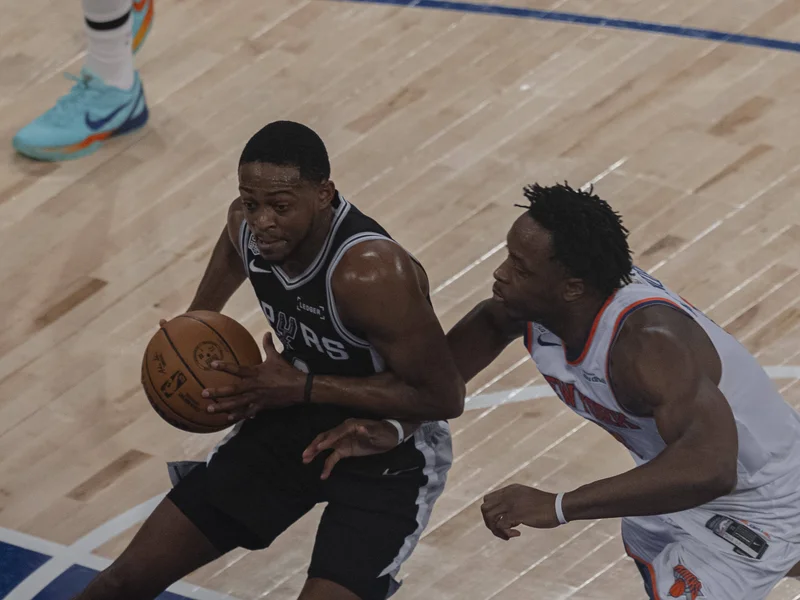
The flashpoint is Wembanyama’s flagrant 1 in Game 4, when his elbow caught Karl-Anthony TownsPlayer·Karl-Anthony Towns on the chin on a drive. The league assessed a flagrant 1, giving Wembanyama his third flagrant point of the 2026 postseason. Under NBA rules, four flagrant points trigger an automatic one-game suspension, meaning any additional flagrant 1 or 2 in this series would sideline him for a Finals game.
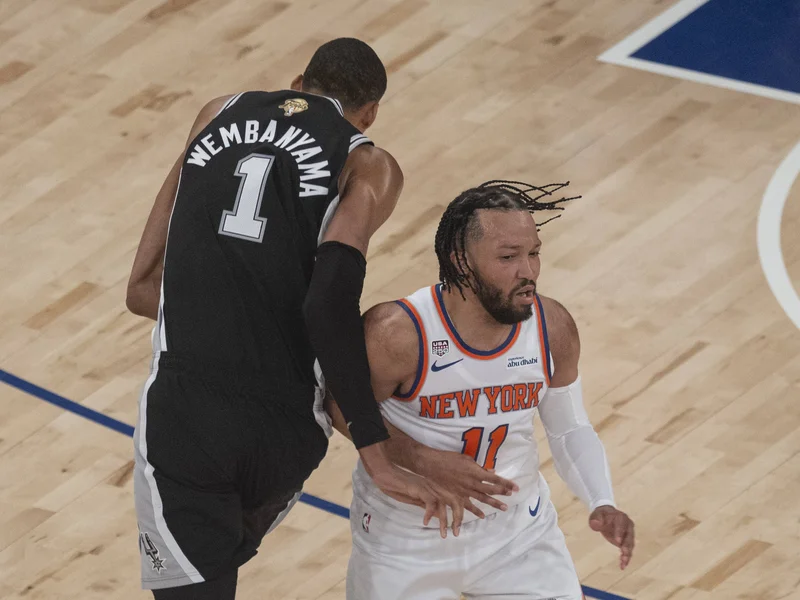
That elbow follows a flagrant 2 call in the Western Conference semifinals, when Wembanyama was ejected in Game 4 against the Minnesota TimberwolvesTeam·Minnesota Timberwolves for striking Naz ReidPlayer·Naz Reid. There was also a physical tangle in Game 3 of the Finals with Jalen BrunsonPlayer·Jalen Brunson that some observers believed warranted an upgrade to a flagrant, but the league left it as a common foul on review. Put together, the sequence has pushed Wembanyama’s physical postseason style into the center of the Finals discourse.
Green, a four-time NBA champion with a history of his own postseason suspensions, including during the 2016 Finals, is uniquely placed in that conversation. He argued that if officials and the league office applied the flagrant system strictly, Wembanyama’s track record this spring would already have cost him a game. At the same time, he acknowledged the other side of the equation: the NBA’s responsibility to keep its biggest stars on the floor when a title is on the line.

According to Green, he ultimately agrees with the league’s decision not to suspend Wembanyama to this point, framing it as a reflection of what fans expect from the Finals stage. The subtext is a familiar one for long-time NBA watchers: how far does the league bend to ensure that marquee players decide championships on the court, and where is the line between star treatment and consistent enforcement?
That question is especially pointed with Wembanyama, who is blending a Defensive Player of the Year résumé with an aggressive interior presence in his first run to the Finals. The 20-year-old averaged 25.0 points, 11.5 rebounds and 3.1 assists in 64 regular-season games, led the league in blocks per game and anchored a Spurs team that finished 62-20 and entered the Western bracket as the No. 2 seed. As the Spurs fought past the Oklahoma City ThunderTeam·Oklahoma City Thunder in seven games and into a matchup with the Knicks, his ability to control the rim has been as defining as his foul count.
The Knicks, the East’s No. 3 seed after a 53-29 regular season, have already shown they can exploit foul trouble on the other side. They swept the Cleveland CavaliersTeam·Cleveland Cavaliers in the conference finals and now sit one win from a championship. Any suspension for Wembanyama would significantly alter San Antonio’s defensive identity and the series’ competitive balance, amplifying why every review of his contact is drawing outsized scrutiny.
The league has navigated this terrain before, most notably with star suspensions that turned past Finals series. Green’s own experience in 2016 remains a reference point for how quickly a flagrant or technical accumulation can reshape a title race. The contrast now is that Wembanyama remains eligible, with the NBA signaling that the existing flagrant calls have not yet crossed its threshold for a Finals ban.
As Game 5 approaches, that leaves a narrow path for player and league alike. Wembanyama must maintain his trademark paint presence and physicality without inviting another upgrade from Secaucus. Officials must call contact involving him the same way they would for any other player, even under the brightest spotlight. And the NBA must balance discipline and spectacle, knowing that one more hard foul from its newest superstar could decide not only a game, but how this Finals is remembered.
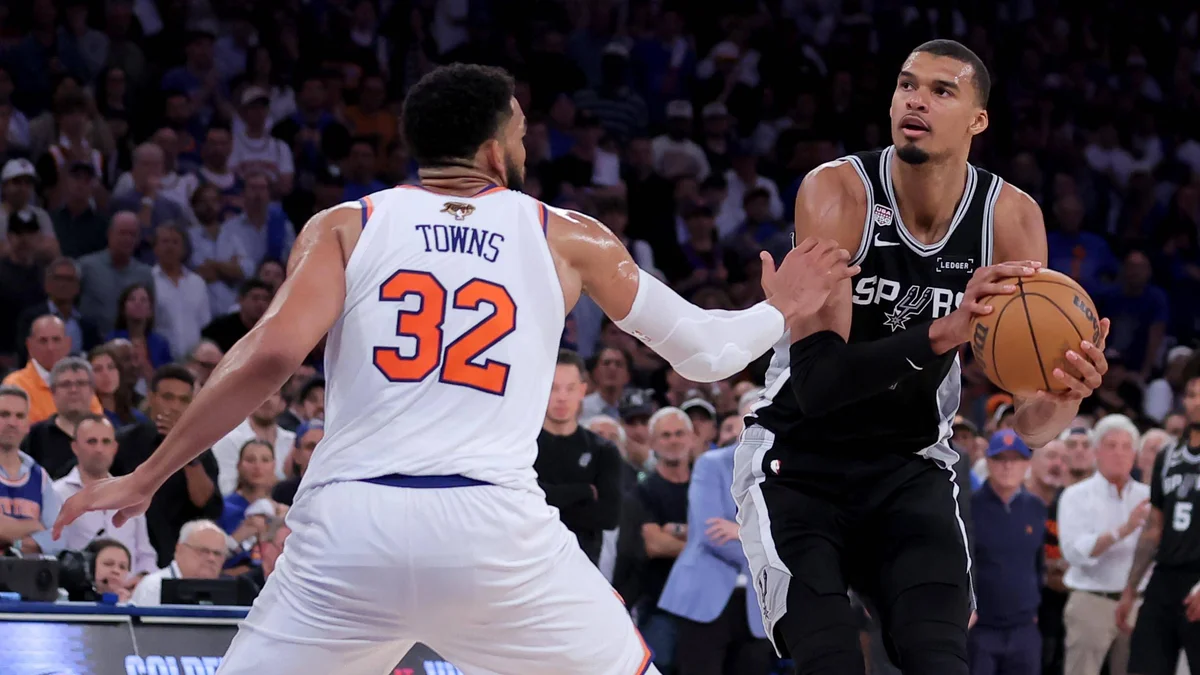
Victor Wembanyama shoots over Karl-Anthony Towns during Game 4 of the 2026 NBA Finals. (PRESSE SPORTS/IMAGO)
PRESSE SPORTS/IMAGOThis article was generated with the help of AI. Learn more.